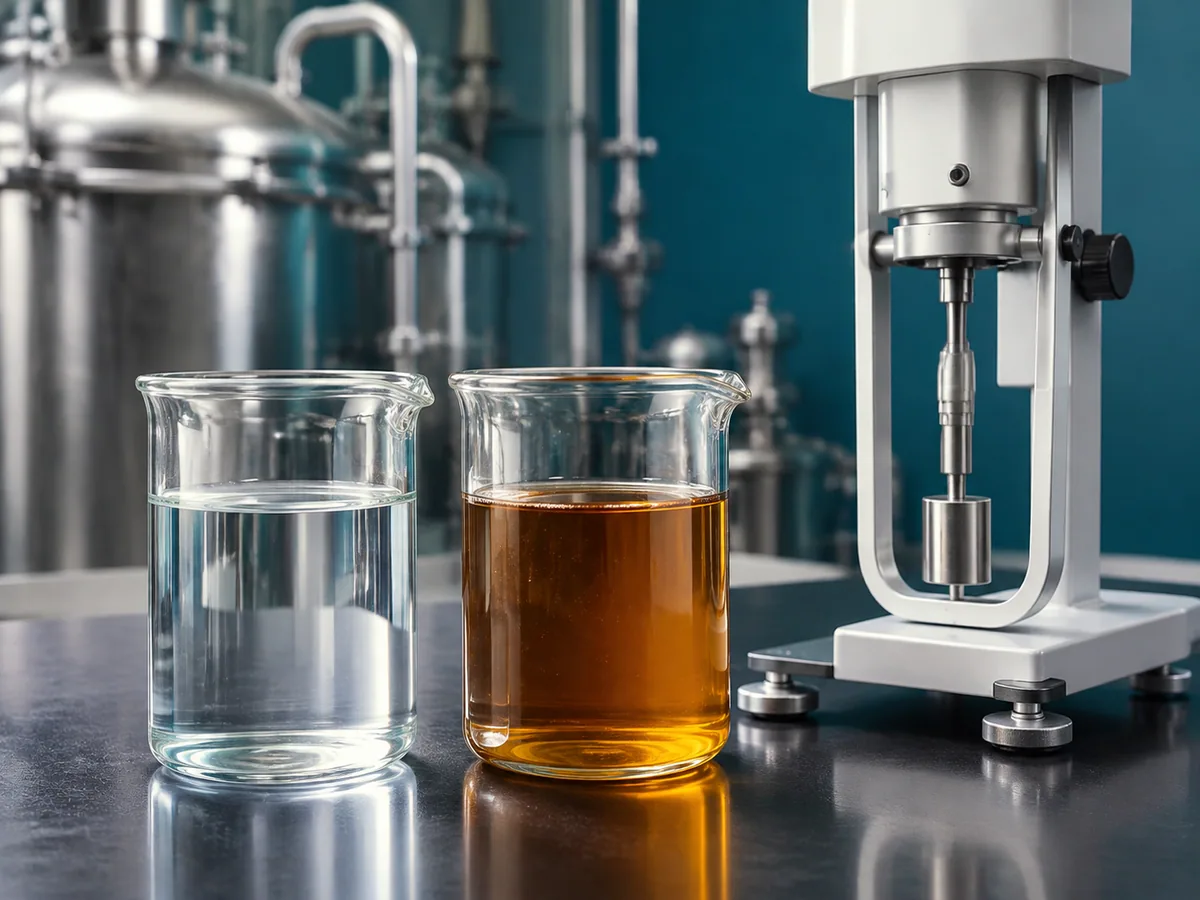
Glycerine, also written glycerin and known chemically as glycerol (propane-1,2,3-triol, C3H8O3), is a clear, viscous, sweet-tasting liquid used in hundreds of products, from alkyd resins to toothpaste. It is sold in three broad grades: crude, technical and refined to pharmacopoeial standards such as USP or Ph. Eur. (EP). This article explains how each grade is made, the parameters that define it, and how to choose and handle the right one.
Where glycerine comes from
Almost all natural glycerine is a by-product of processing oils and fats:
- Biodiesel production: transesterification releases roughly 1 kg of crude glycerine for every 10 kg of biodiesel. This crude contains methanol, catalyst salts and organic impurities.
- Fat splitting: hydrolysis of oils and fats for fatty acid production gives a glycerine-water stream (sweet water) that is concentrated into a relatively clean crude.
- Soap making: kettle soap production leaves a salty lye from which glycerine is recovered.
Glycerine can also be made synthetically from propylene, and some is made by fermentation, so origin is worth confirming where it matters to your customers.
Crude glycerine
Crude glycerine is the unrefined product. Its quality depends on the source:
- Glycerol content: typically about 80–88%; biodiesel crude is often around 80%, while crude from fat splitting can be higher.
- Water: typically about 8–15%.
- Ash (inorganic salts): typically about 4–7% for biodiesel and soap-lye crude, lower for crude from fat splitting.
- MONG: matter organic non-glycerol, meaning fatty acids, soaps, esters and other organics. It is usually calculated as 100 minus glycerol, water and ash, and commonly falls around 1–5%, although poorly processed crude can be much higher.
- Methanol: in biodiesel crude, typically limited to around 0.5% or less after methanol recovery.
Crude glycerine is sold to refiners, used in anaerobic digestion and some chemical processes, and, where regulations permit, in animal feed. It is also listed in Annex IX Part A of the EU Renewable Energy Directive, which gives it value as an advanced biofuel and biomethane feedstock.
Technical glycerine
Technical glycerine has been refined, usually by distillation and often by bleaching, to a high purity, typically around 95–99.5% glycerol. It is not tested against a pharmacopoeia monograph, so its colour, odour and impurity limits are set by the producer's specification rather than by a public standard.
It is used in alkyd and polyester resins, polyurethane polyols, adhesives, printing inks, textile processing, cellulose films, de-icing formulations and as a chemical intermediate. For these uses, glycerol content, water, colour and ash usually matter more than trace impurities.
Refined USP and EP glycerine
Refined glycerine is produced to pharmacopoeia standards, most commonly the United States Pharmacopeia (USP) or the European Pharmacopoeia (Ph. Eur. or EP). Commercial grades are usually sold as 99.5% or 99.7% glycerol. The monographs set the assay on an anhydrous basis and specify tests including:
- Identification, appearance and colour.
- Water content and specific gravity or relative density.
- Residue on ignition, chlorides and sulphates.
- Fatty acids and esters, and related substances.
- Limits for diethylene glycol (DEG) and ethylene glycol (EG); the USP monograph limits each to 0.10%.
Food-grade glycerine (E 422 in the EU) is supplied to food-additive specifications. Refined glycerine is the grade used in pharmaceuticals, personal care, oral care and food, and wherever purity and consistency must be documented.
Grades compared at a glance
These values are indicative; always check the specification for the offered lot.
- Glycerol content: crude about 80–88%; technical about 95–99.5%; refined USP/EP usually 99.5% or higher.
- Water: crude about 8–15%; technical and refined usually 0.5% or less for high-purity grades.
- Ash: crude about 4–7% or lower; technical low; refined very low.
- MONG: crude about 1–5% or more; technical and refined very low.
- Colour: crude yellow to dark brown; technical pale; refined water-white.
- Main uses: crude for refining, biogas and feedstock; technical for resins, inks and industry; refined for pharmaceuticals, personal care and food.
Why DEG and EG testing matters
Diethylene glycol has been substituted for, or has contaminated, glycerine used in medicines, causing fatal poisonings in several countries. Pharmacopoeias therefore require specific tests for DEG and EG, and regulators expect manufacturers to verify each lot. If you buy glycerine for pharmaceutical or personal-care use, ask for batch results for these tests and for documentation that traces the lot to its manufacturing site.
Handling, storage and shipping
Glycerine is hygroscopic: it absorbs water from the air, which lowers its assay. Store refined grades in closed stainless steel or suitably lined tanks with a desiccant breather or nitrogen blanket. Glycerine is very viscous when cold, around 1,400 mPa·s at 20 °C for pure glycerol, so heat tanks and lines gently for pumping in cold weather. Crude glycerine can contain salts that corrode some steels and may contain methanol, so check the safety data sheet for its flammability and transport classification. Refined glycerine is generally not classified as dangerous goods for transport.
Glycerine is shipped in 250 kg drums, IBCs, flexitanks, ISO tanks and bulk parcels.
Choosing a grade
Start from the end use: pharmaceutical, food and personal-care applications need refined glycerine with the matching monograph documentation; industrial uses usually need technical glycerine; crude suits refining and energy. Ask for a specification and certificate of analysis for each lot, the safety data sheet and an origin declaration (vegetable, animal or synthetic). For pharmacopoeial, halal, kosher or sustainable palm claims, ask for the certificate scope with your quotation.
Glycerine from fat splitting is closely linked to fatty acid production; our stearic acid guide explains that process. To discuss requirements, see our glycerine page and our pages for personal care and coatings, inks and resins.
Frequently asked questions
Are glycerine, glycerin and glycerol the same?
Yes. Glycerol is the chemical name; glycerine and glycerin are commercial spellings for products that are mostly glycerol.
What does MONG mean in crude glycerine?
Matter organic non-glycerol: organic impurities such as fatty acids, soaps and esters. It is usually calculated as 100 minus glycerol, water and ash.
What is the difference between technical and USP glycerine?
Both can be high purity, but USP glycerine is tested against the United States Pharmacopeia monograph, including limits for diethylene glycol and ethylene glycol. Technical glycerine is produced to a supplier specification for industrial uses.
Can crude glycerine be used directly in products?
Only in limited applications, such as biogas production or some industrial processes. Its salts, water, methanol and organic impurities make it unsuitable for most formulated products until it is refined.
Why does glycerine need a nitrogen blanket or desiccant breather?
Glycerine absorbs moisture from the air, which dilutes it and can take a refined grade out of specification. Closed storage with dry air or nitrogen prevents this.