Bio Green Oleo / Oleochemicals & Fatty Acid Derivatives
Our Oleochemicals
Browse our range of fatty acids, glycerine, soap noodles and oleochemical feedstock
Zeige 41 Produkte
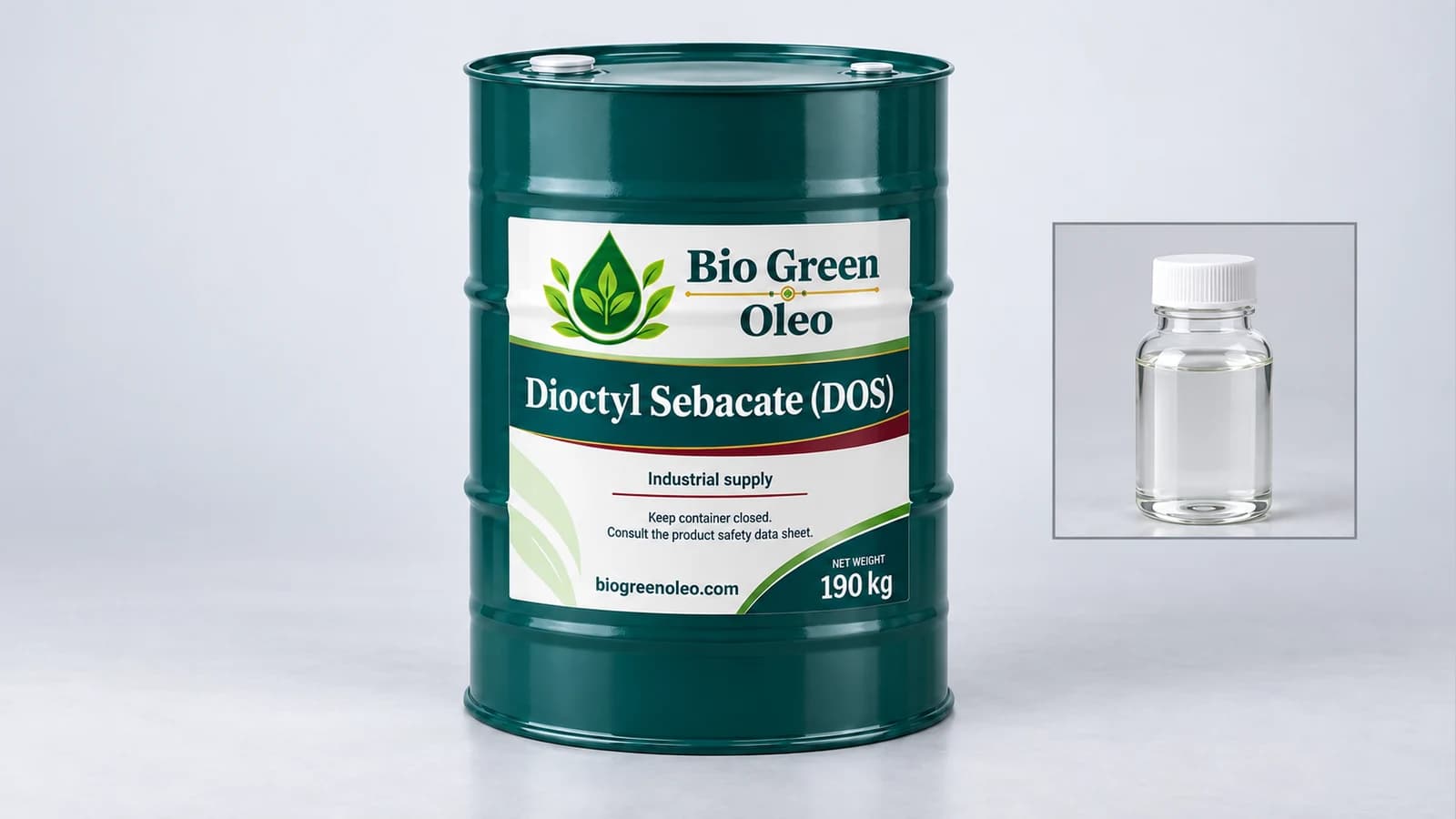
Dioctylsebacat (DOS)
Diester der Sebacinsäure (CAS 122-62-3), der aus Rizinusöl gewonnenen Dicarbonsäure mit zehn Kohlenstoffatomen. Ein aus Rizinus gewonnener Ester, der als Grundöl für synthetische Schmierstoffe sowie als Tieftemperatur-Weichmacher eingesetzt wird.
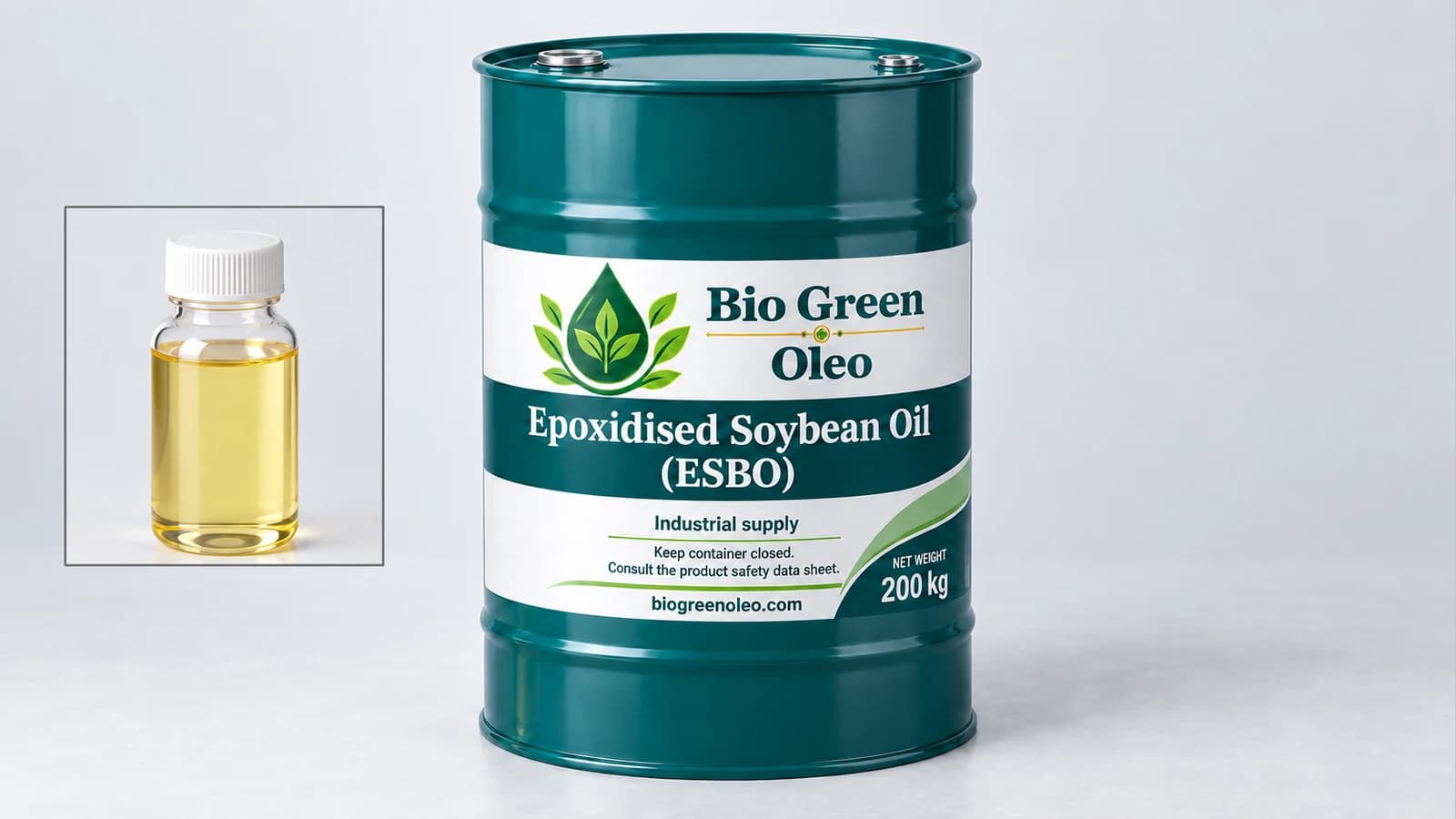
Epoxidiertes Sojaöl (ESBO)
Epoxidiertes pflanzliches Triglycerid (CAS 8013-07-8), das nach dem Oxirangehalt eingekauft wird. Eine der mengenmäßig größten biobasierten Funktionschemikalien und ein Zugang zu Polyolen ohne petrochemischen Rohstoff.

Laurinsäure
Laurinsäure, systematisch Dodecansäure, ist die gesättigte Fettsäure mit zwölf Kohlenstoffatomen und der CAS-Nummer 143-07-7. Sie ist die Hauptsäure von Kokos- und Palmkernöl und die Kettenlänge, auf der der Großteil der schäumenden Tensidchemie aufbaut.

Myristinsäure
Myristinsäure, systematisch Tetradecansäure, ist die gesättigte Fettsäure mit vierzehn Kohlenstoffatomen und der CAS-Nummer 544-63-8. Sie wird aus Kokos-, Palmkern- und Muskatnussöl gewonnen und erzeugt in Seifen und Reinigungsmitteln einen dichten, stabilen und cremigen Schaum.

Palmitinsäure
Palmitinsäure, systematisch Hexadecansäure, ist die gesättigte Fettsäure mit sechzehn Kohlenstoffatomen und der CAS-Nummer 57-10-3. Sie ist nach Palmöl benannt, in dem sie die vorherrschende Säure ist, schmilzt bei etwa 63 Grad Celsius und verleiht Seifen und Kosmetika ihre Festigkeit.

Ölsäure
Ölsäure (CAS 112-80-1) ist die einfach ungesättigte Fettsäure mit achtzehn Kohlenstoffatomen, bei Raumtemperatur flüssig aufgrund der einzelnen cis-Doppelbindung, die ihre Kette abknickt. Handelsqualitäten werden nach Jodzahl, Titer und Farbe gehandelt.

Caprylsäure
Caprylsäure, systematisch Octansäure, ist eine gesättigte Fettsäure mit acht Kohlenstoffatomen und der CAS-Nummer 124-07-2. Sie wird aus Kokos- und Palmkernöl gewonnen, schmilzt nahe 17 Grad Celsius und ist ein wichtiger Rohstoff für MCT-Öl und die Estersynthese.

Caprinsäure
Caprinsäure, systematisch Decansäure, ist eine gesättigte Fettsäure mit zehn Kohlenstoffatomen und der CAS-Nummer 334-48-5. Sie wird durch Fraktionierung von Kokos- oder Palmkernöl gewonnen, schmilzt bei etwa 31 Grad Celsius und dient als Baustein für Ester und MCT-Öle.

Capronsäure
Capronsäure, systematisch Hexansäure, ist eine gesättigte Fettsäure mit sechs Kohlenstoffatomen und der CAS-Nummer 142-62-1. Sie ist bei Raumtemperatur eine ölige Flüssigkeit mit intensivem käseartigem Geruch und wird vor allem zur Herstellung von Aroma- und Duftstoffestern verwendet.

Cetylalkohol
Cetylalkohol (CAS 36653-82-4, INCI Cetyl Alcohol) ist ein gesättigter Fettalkohol mit sechzehn Kohlenstoffatomen, der als weißer, wachsartiger Feststoff mit einem Schmelzpunkt nahe 49 Grad Celsius geliefert wird. Er verdickt Emulsionen und verleiht Cremes und Conditionern ihren charakteristischen Gleiteffekt.

Stearylalkohol
Stearylalkohol (CAS 112-92-5, INCI Stearyl Alcohol) ist der gesättigte Fettalkohol mit achtzehn Kohlenstoffatomen, ein weißer, wachsartiger Feststoff mit einem Schmelzpunkt nahe 58 Grad Celsius. Er ist der festeste der gängigen kosmetischen Fettalkohole und verleiht den reichhaltigsten Körper.

Cetostearylalkohol
Cetostearylalkohol (CAS 67762-27-0, INCI Cetearyl Alcohol) ist eine Mischung aus Cetyl- und Stearylalkohol, meist in etwa gleichen Teilen. Er ist der Standard-Konsistenzgeber und Co-Emulgator in Cremes, Lotionen und Haarspülungen.

Myristylalkohol
Myristylalkohol (CAS 112-72-1, INCI Myristyl Alcohol) ist der gesättigte Fettalkohol mit vierzehn Kohlenstoffatomen, ein weißer wachsartiger Feststoff mit einem Schmelzpunkt nahe 38 Grad Celsius. Er ist leichter als Cetylalkohol und wird eingesetzt, wo ein weicherer Stand und ein schnelleres Schmelzen gewünscht sind.

Isopropylpalmitat
Isopropylpalmitat (CAS 142-91-6, INCI Isopropyl Palmitate) ist der Ester aus Isopropanol und Palmitinsäure. Es ist auf der Haut etwas schwerer und polsternder als Isopropylmyristat und wird als Emolliens und Pigmentbenetzungsmittel eingesetzt.

Isopropylmyristat
Isopropylmyristat (CAS 110-27-0, INCI Isopropyl Myristate) ist der Ester aus Isopropanol und Myristinsäure, ein klares, niedrigviskoses Öl. Es verteilt sich und zieht schnell ein, ohne fettig zu wirken, und wird eingesetzt, um schwere Formulierungen zu verdünnen und die Penetration zu unterstützen.

Cetylpalmitat
Cetylpalmitat (CAS 540-10-3, INCI Cetyl Palmitate) ist der Ester aus Cetylalkohol und Palmitinsäure, ein weißes kristallines Wachs mit einem Schmelzpunkt von etwa 50 Grad Celsius. Es ist der pflanzliche Ersatz für Walrat in Cremes, Stiften und dekorativer Kosmetik.

Natriumlaurethsulfat (SLES)
Natriumlaurethsulfat (INCI Sodium Laureth Sulfate) ist SLS mit Ethylenoxideinheiten zwischen Fettkette und Sulfatkopf, üblicherweise zwei oder drei. Diese Einheiten machen es milder, besser löslich und deutlich empfindlicher gegenüber Salzverdickung.

Cocamidopropylbetain (CAPB)
Cocamidopropylbetain (CAS 61789-40-0, INCI Cocamidopropyl Betaine) ist ein amphoteres Tensid auf Basis von Kokosfettsäuren. Es wird als 30-prozentige Lösung geliefert und ist das übliche Co-Tensid, das die Schaumbildung verbessert und die Reizwirkung von SLES verringert.

Jojobaöl
Jojobaöl (CAS 61789-91-1, INCI Simmondsia Chinensis Seed Oil) ist kein Öl im üblichen Sinne. Es ist ein flüssiger Wachsester aus dem Samen von Simmondsia chinensis, und diese Struktur macht es außergewöhnlich oxidationsbeständig.
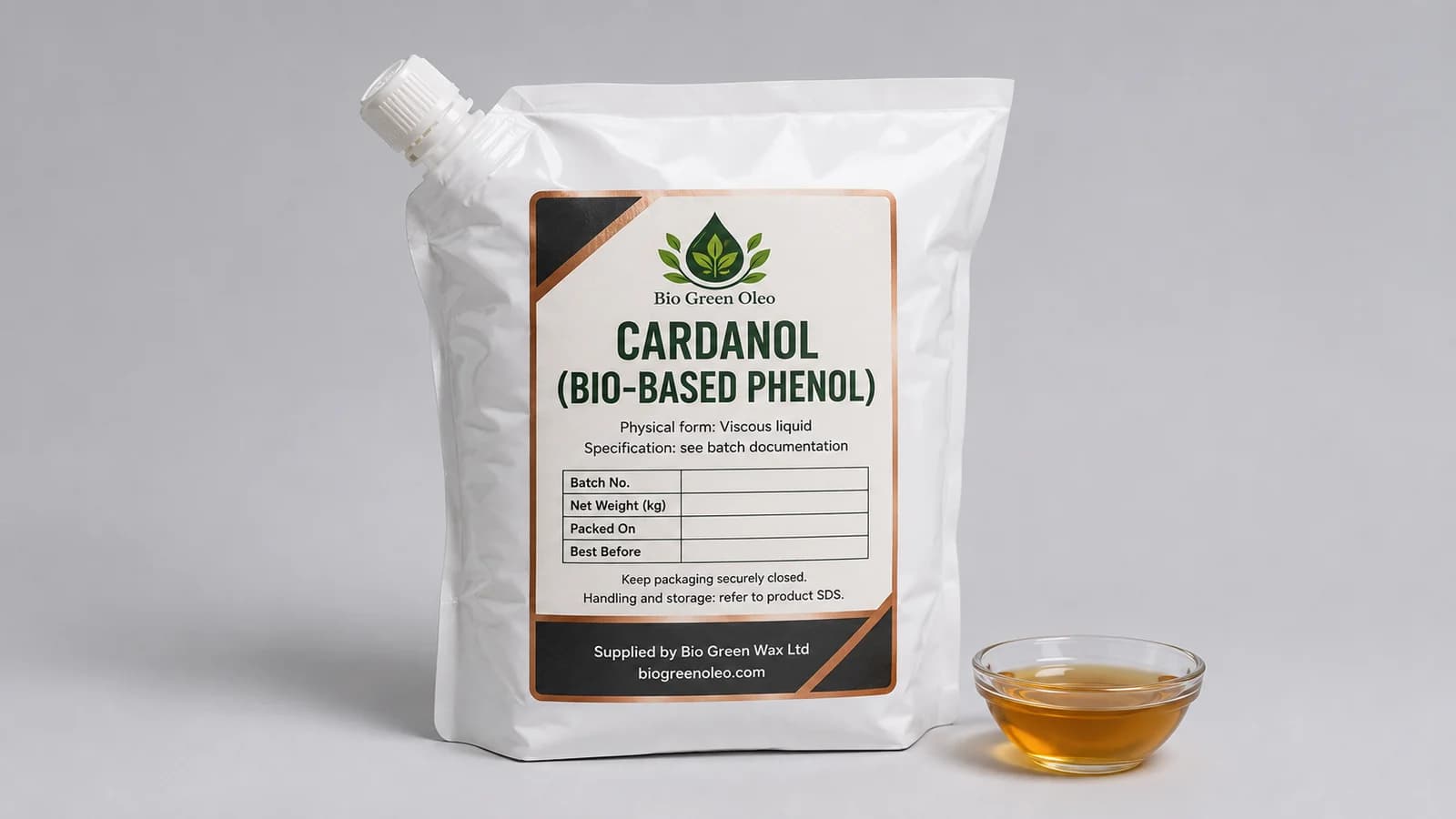
Cardanol (biobasiertes Phenol)
Cardanol (CAS 37330-39-5) ist ein erneuerbares Phenol, das aus Cashewnussschalenöl destilliert wird. Es trägt am Benzolring eine ungesättigte Seitenkette mit fünfzehn Kohlenstoffatomen, die daraus aufgebauten Phenolharzen eine natürliche innere Flexibilität verleiht.
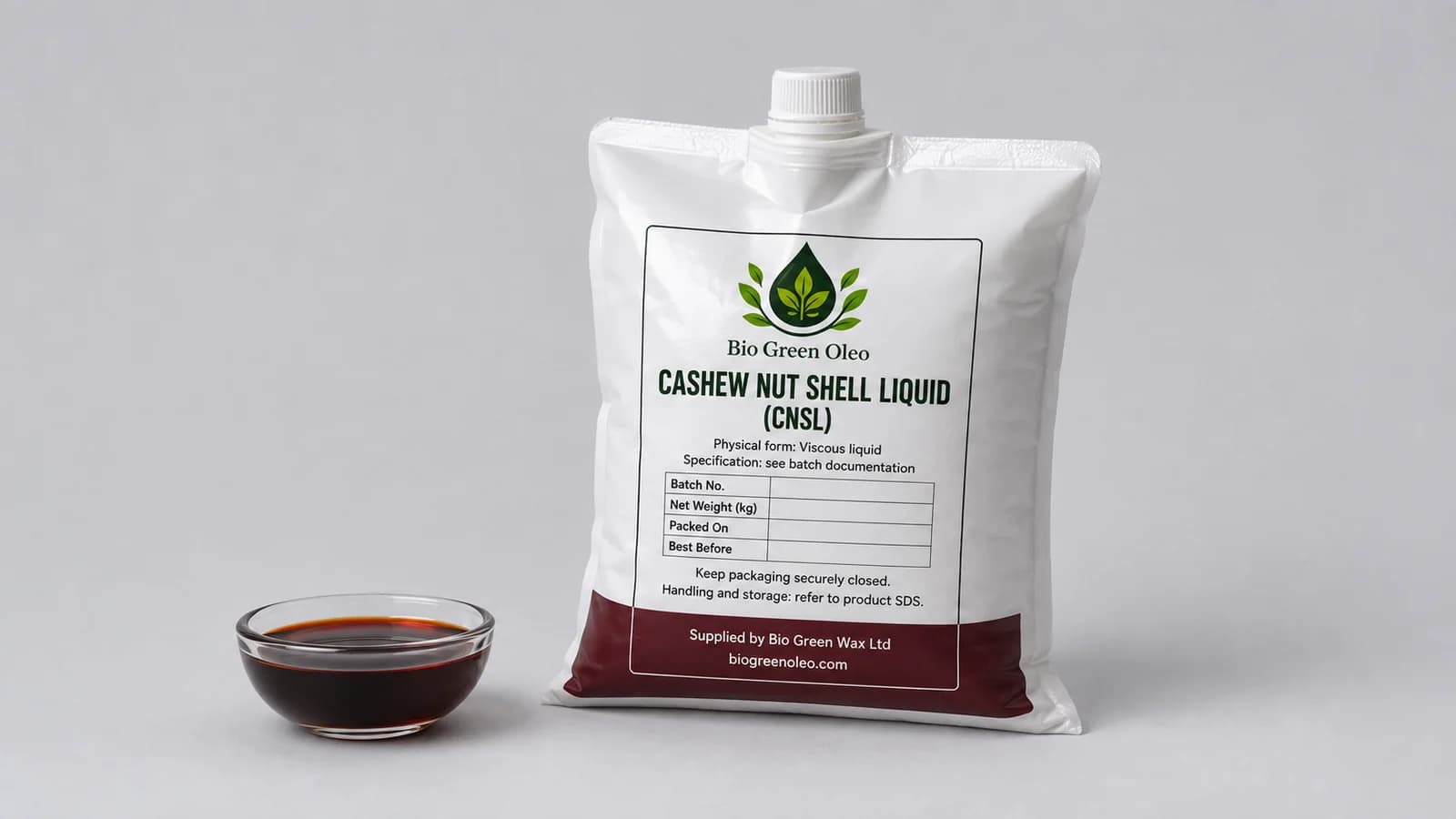
Cashewnussschalenöl (CNSL)
Cashewnussschalenöl (CAS 8007-24-7) ist das dunkle Harz in der Schale der Cashewnuss, Anacardium occidentale. Als Nebenprodukt der Nussverarbeitung ist es weltweit die wichtigste erneuerbare Quelle für Alkylphenole für Harze und Reibbeläge.
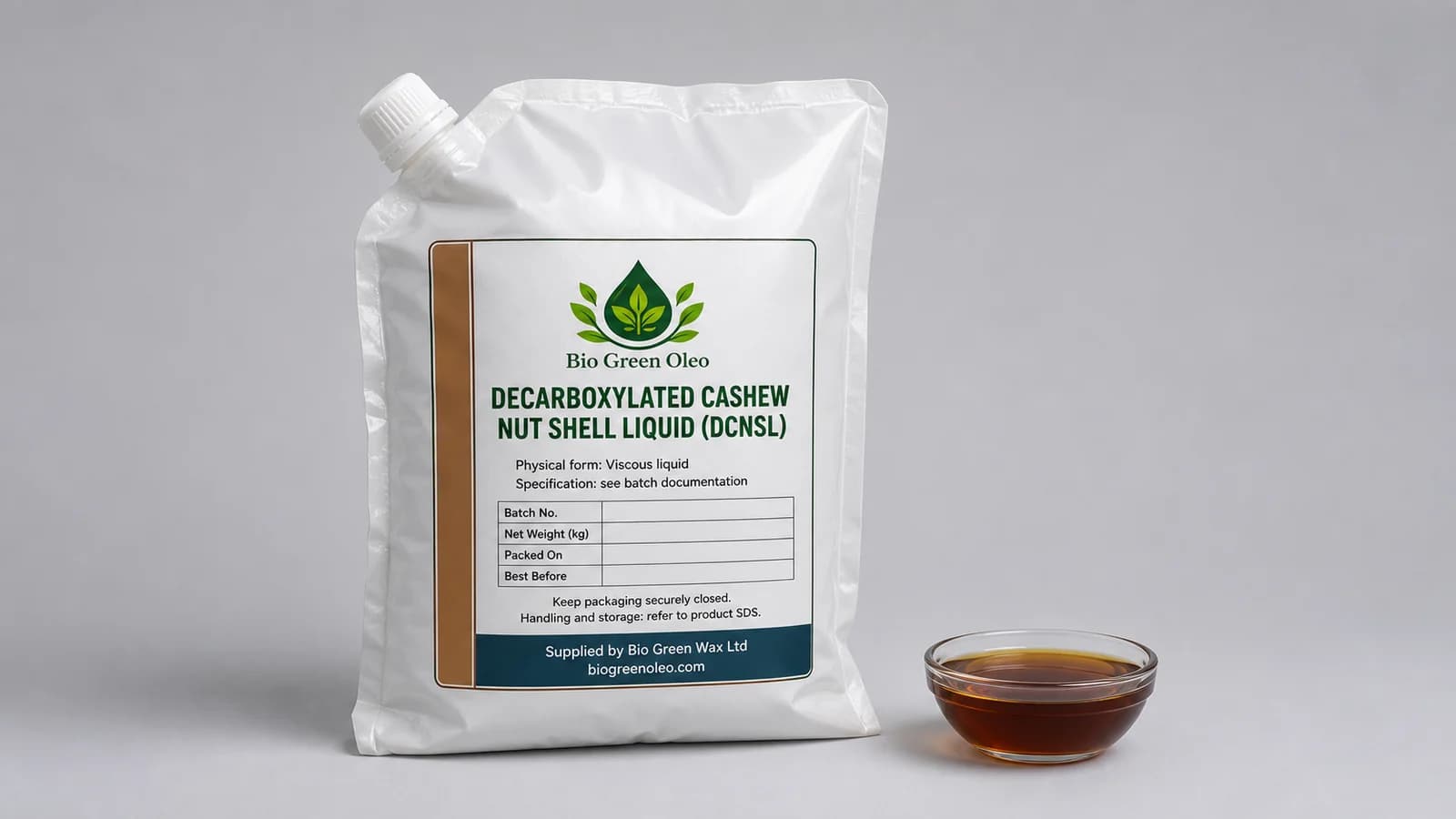
Decarboxyliertes Cashewnussschalenöl (DCNSL)
Decarboxyliertes Cashewnussschalenöl ist CNSL, das thermisch behandelt wurde, sodass die enthaltene Anacardsäure Kohlendioxid abspaltet und in Cardanol übergeht. Das Ergebnis ist ein cardanolreiches, erneuerbares Phenol mit geringerer Acidität und besserer Thermostabilität.
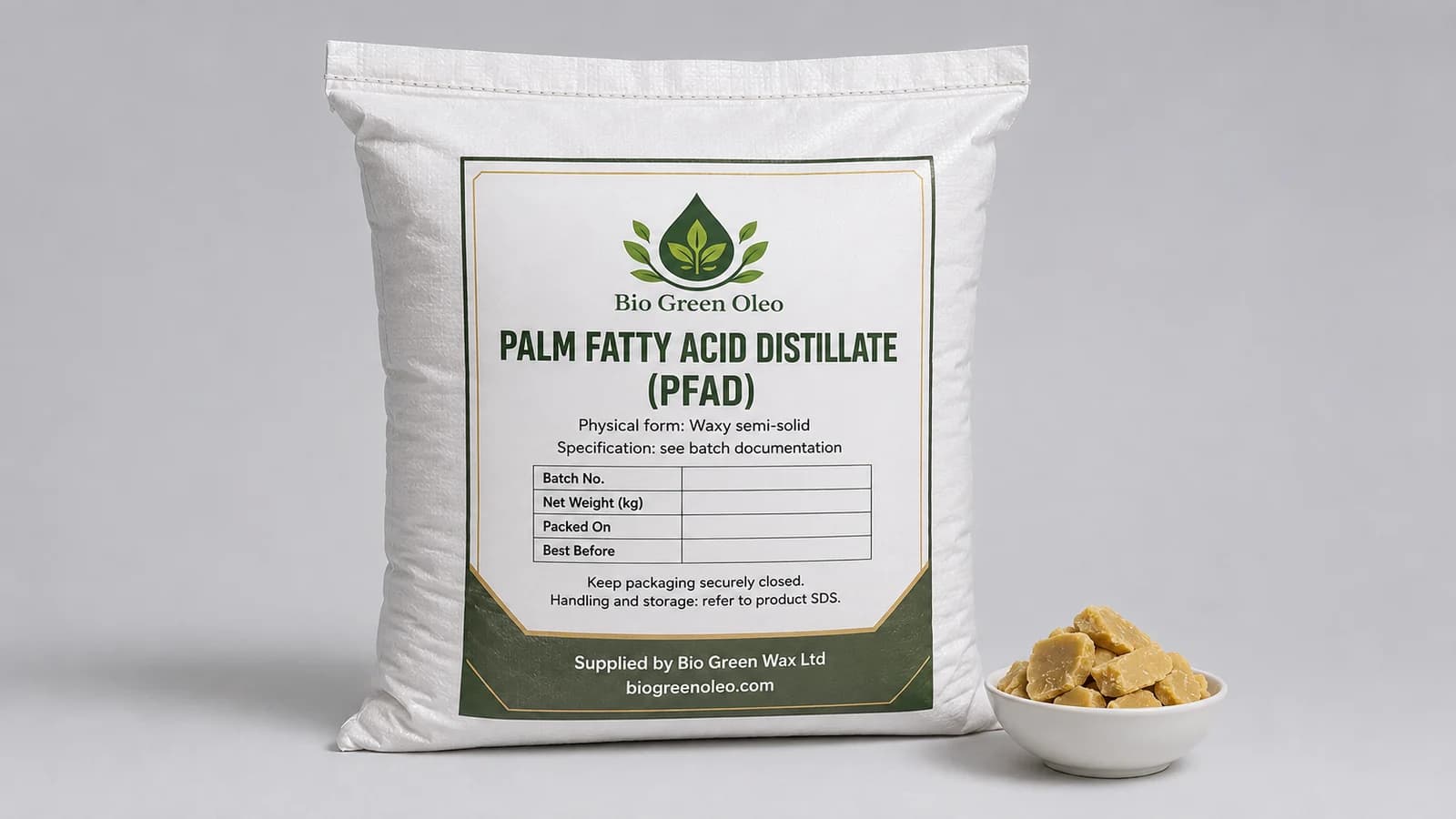
PFAD (Palmfettsäuredestillat)
PFAD ist das Kondensat, das bei der Raffination von Palmöl im Desodorierer anfällt. Mit typischerweise 85 bis 95 Prozent freien Fettsäuren ist es ein kostengünstiger gemischter Rohstoff für Seife, Fettsäuregewinnung, Futtermittel und die Biodiesel-Veresterung.
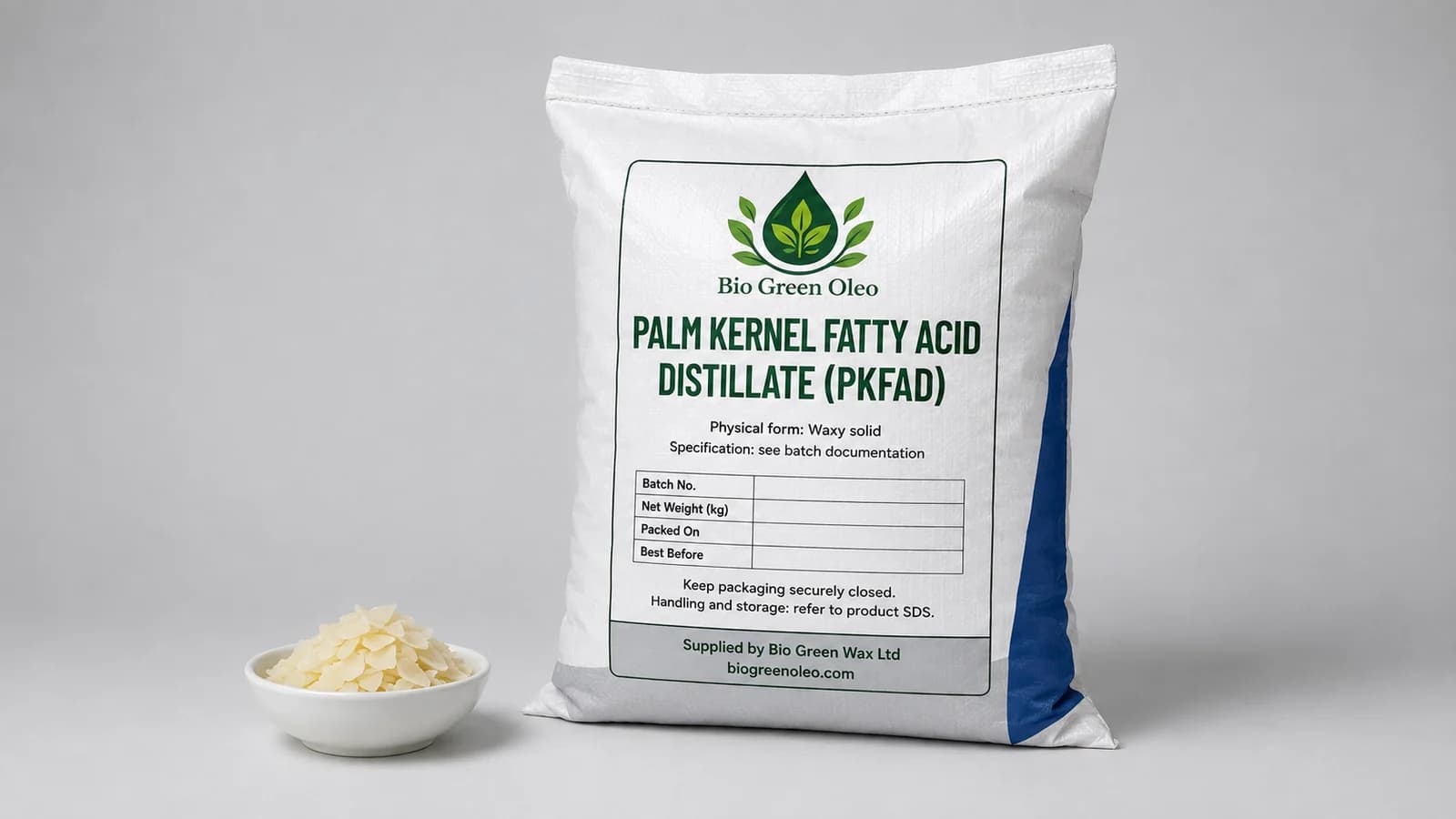
Palmkernfettsäuredestillat (PKFAD)
PKFAD ist das Desodorierer-Destillat aus der Raffination von Palmkernöl. Es enthält die Laurin- und Myristinsäureketten des Ausgangsöls bei hohem Gehalt an freien Fettsäuren und ist damit ein günstiger kurzkettiger Rohstoff für Seife und Tensid-Zwischenprodukte.
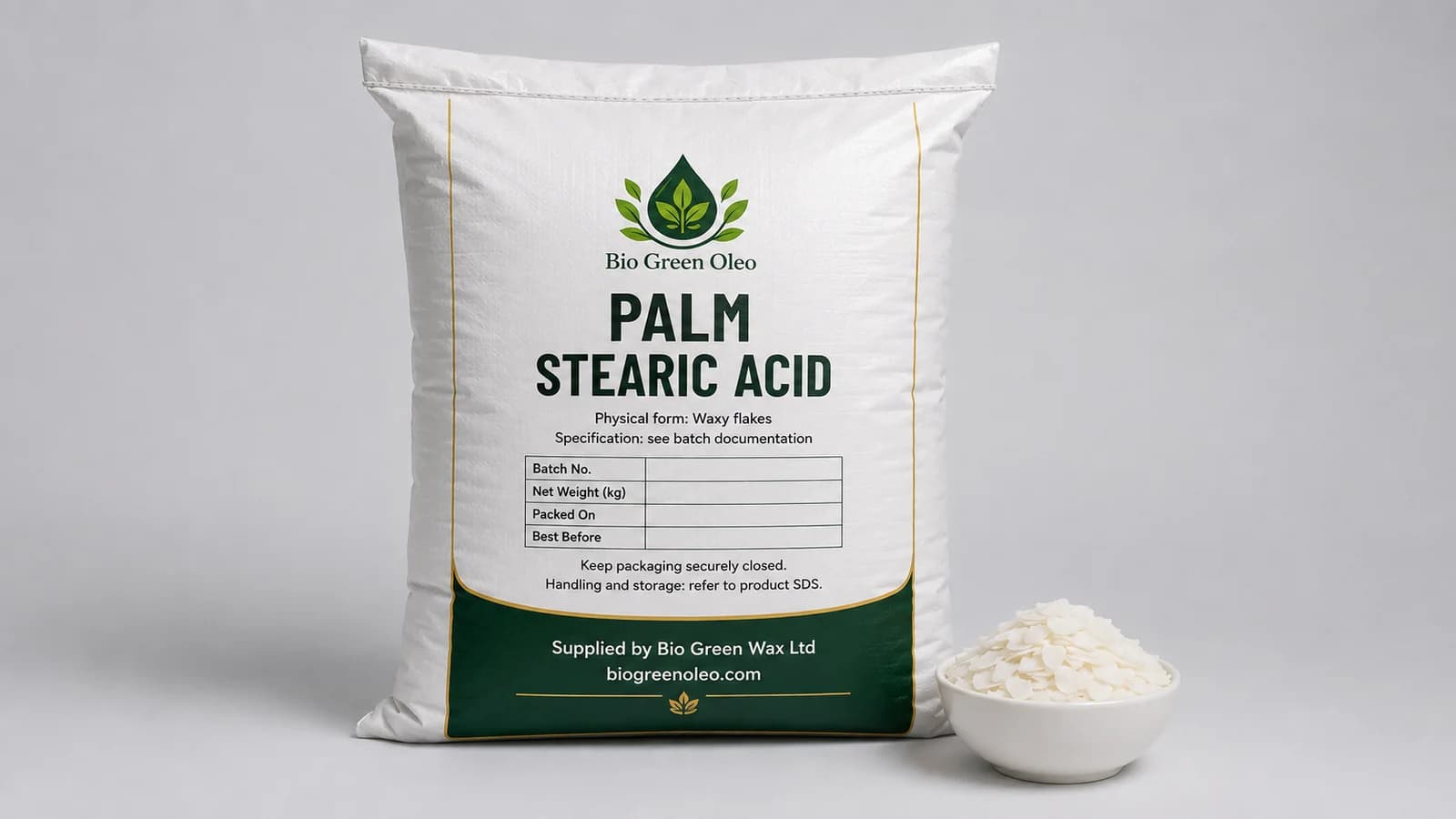
Palmstearinsäure
Palmstearinsäure ist keine reine Stearinsäure, sondern eine abgestufte Mischung aus Palmitin- und Stearinketten, die nach Titer gehandelt wird. Übliche Qualitäten sind 40:60, 50:50 und dreifach gepresst; der Titer bestimmt Härte, Schmelzpunkt und Verhalten in der Weiterverarbeitung.
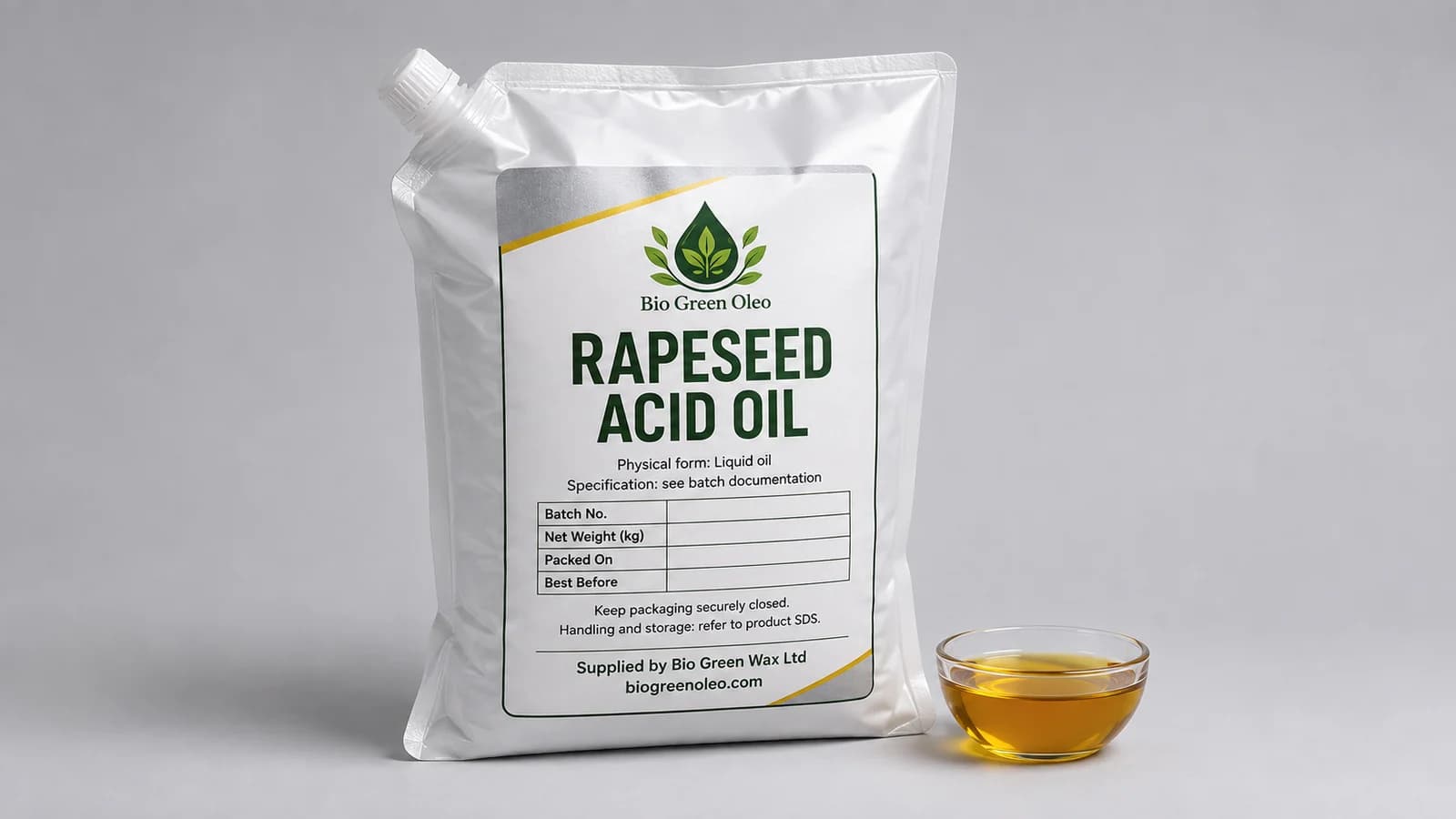
Raps-Säureöl
Raps-Säureöl entsteht durch Ansäuern des Soapstocks, der bei der Raffination von Rapsöl anfällt. Es ist ein variabler, kostengünstiger Rohstoff aus gemischten Fettsäuren mit hohem Ölsäureanteil und wird in der Industrieseife, in der Veresterung und als Energieträger im Futter eingesetzt.
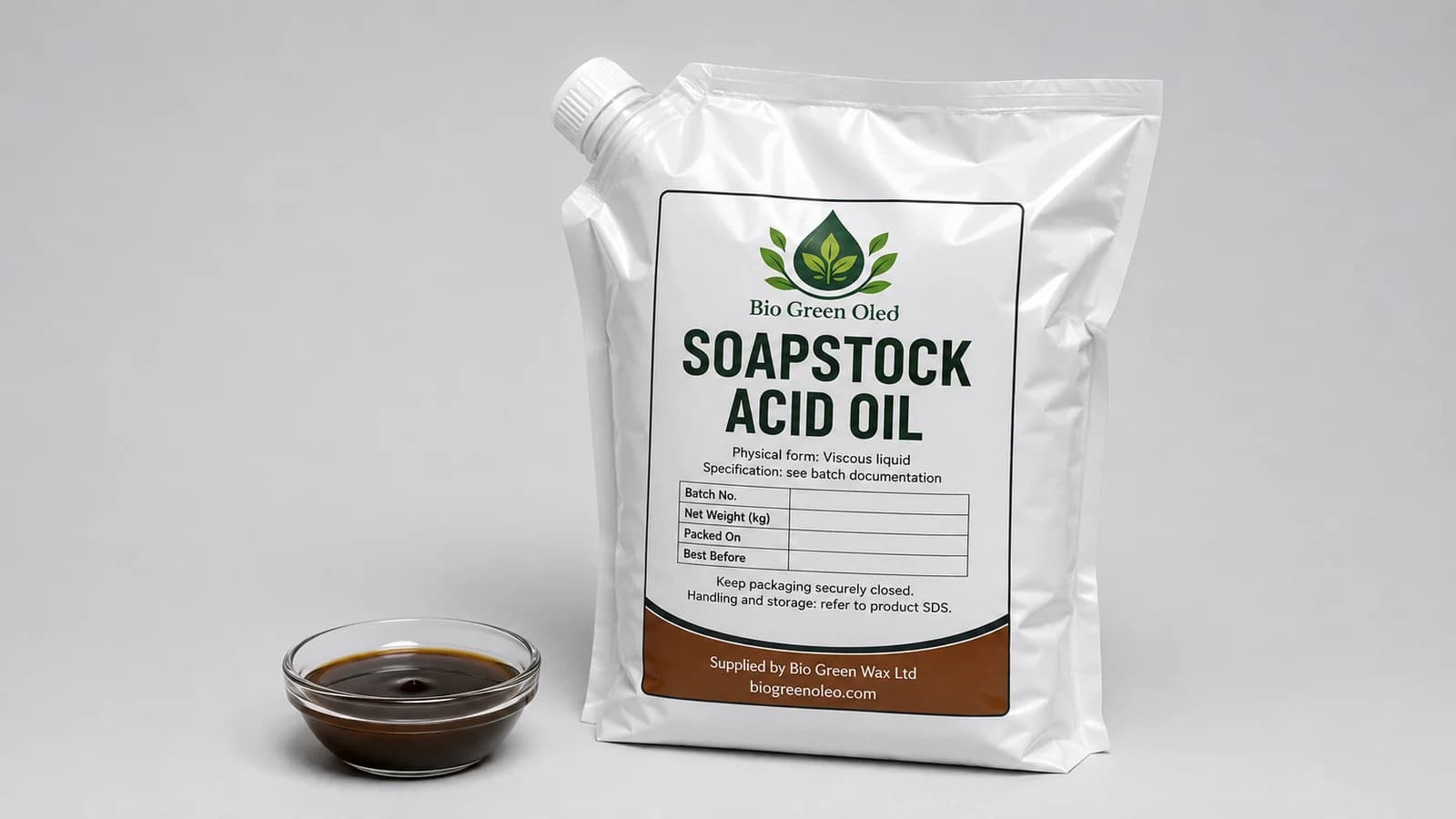
Soapstock-Säureöl
Soapstock-Säureöl ist der Mischfettsäurestrom, der durch Ansäuern von Raffinerie-Soapstock gewonnen wird. Die Zusammensetzung richtet sich danach, welche Öle die Raffinerie gerade verarbeitet hat, was es zum günstigsten und zugleich unbeständigsten Fettsäure-Rohstoff macht.
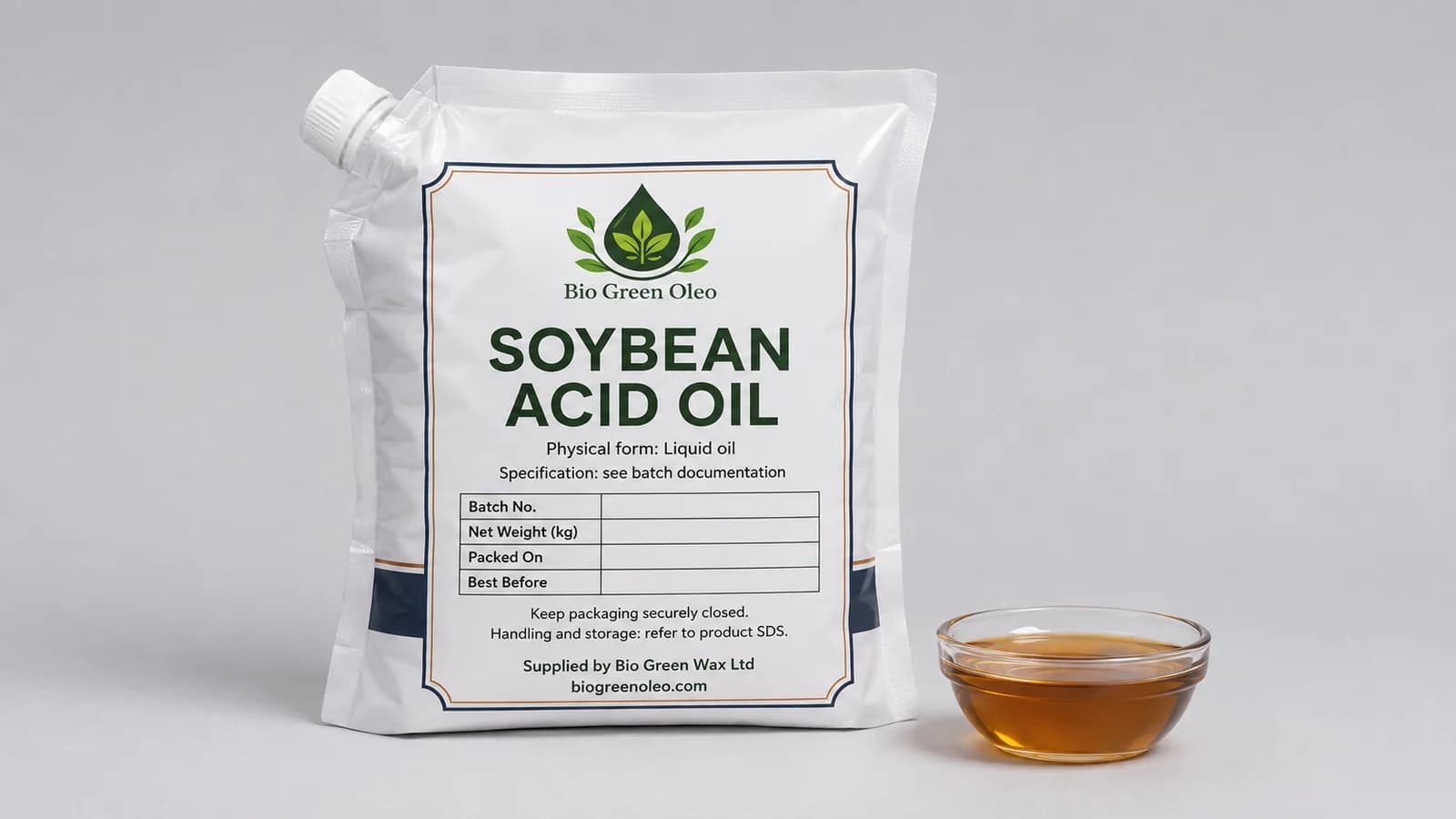
Soja-Säureöl
Soja-Säureöl wird durch Ansäuern des Soapstocks aus der Sojaölraffination gewonnen. Sein hoher Linolsäuregehalt verleiht ihm die reaktivste Ungesättigtheit unter den gängigen Säureölen, was es für Epoxidierungs- und Alkydharzrouten geeignet macht.
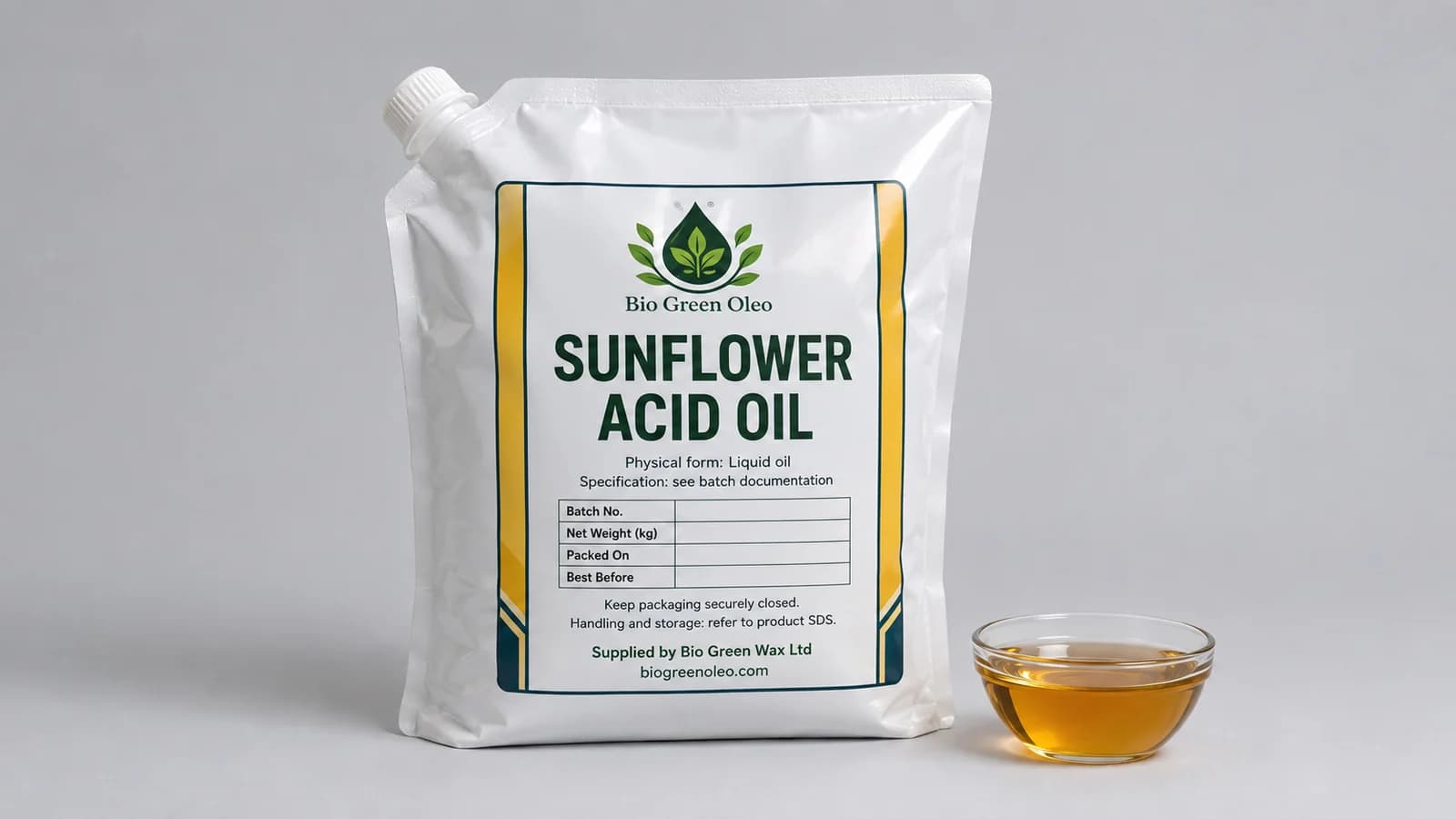
Sonnenblumen-Säureöl
Sonnenblumen-Säureöl ist der Mischfettsäurestrom, der durch Ansäuern des Soapstocks aus der Sonnenblumenraffination gewonnen wird. Es ist reich an Linolsäure, für ein Säureöl vergleichsweise hell und wird in Industrieseife, bei der Veresterung und in Futtermitteln eingesetzt.
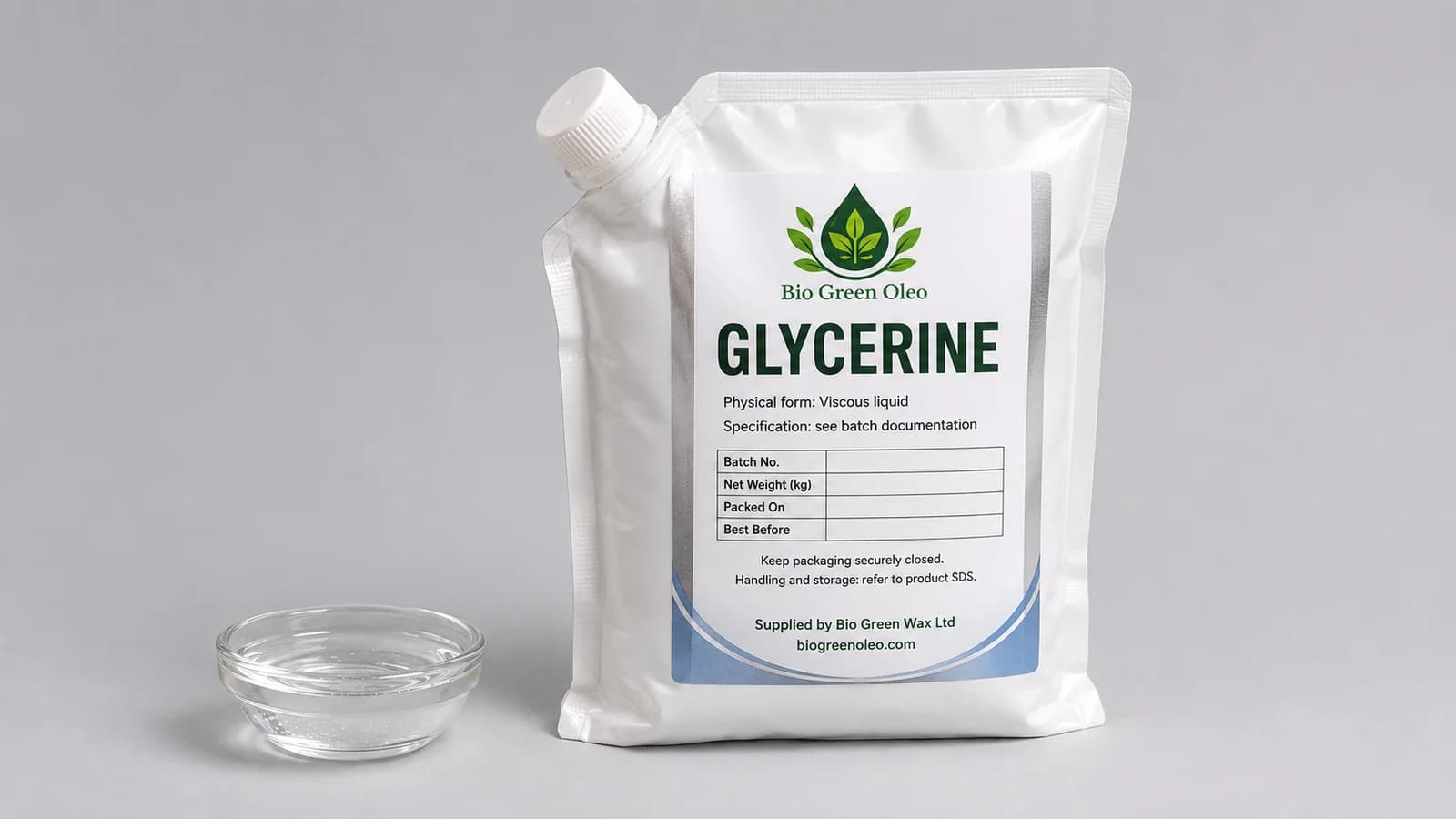
Glycerin
Glycerin (CAS 56-81-5, INCI Glycerin) ist Propan-1,2,3-triol, eine klare, geruchlose, sirupartige Flüssigkeit mit süßem Geschmack. Es fällt als Koppelprodukt der Seifenherstellung und der Biodieselproduktion an und wird als Rohglycerin oder raffiniert auf 99.5 Prozent gehandelt.
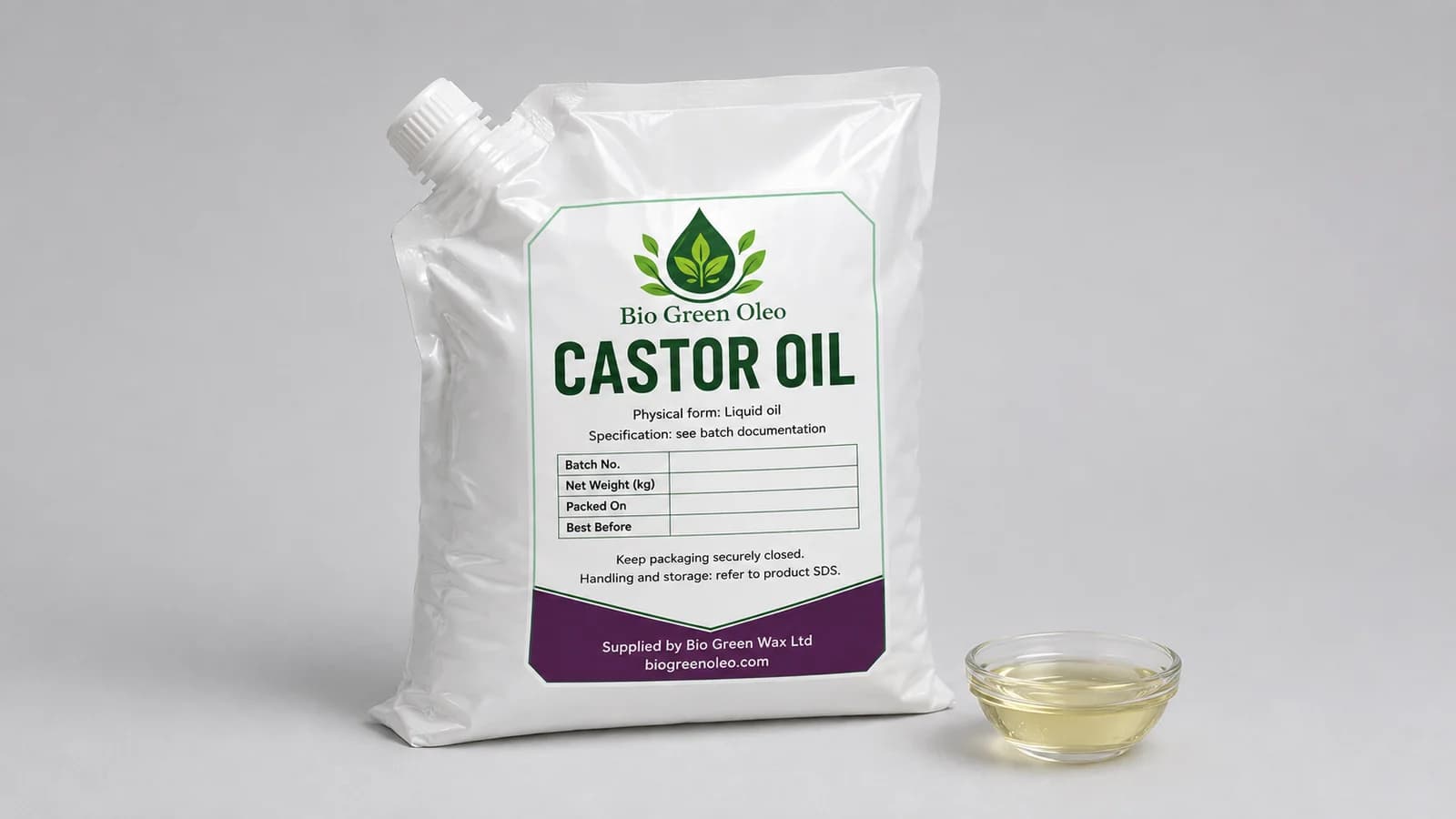
Rizinusöl
Rizinusöl ist der Rohstoff für einen ganzen Zweig der Oleochemie, denn Ricinolsäure trägt eine Hydroxylgruppe, die gewöhnlichen Fettsäuren fehlt. Diese Gruppe ist der Einstieg zu Sebacinsäure, Undecylensäure, Polyolen und 12-Hydroxystearinsäure.
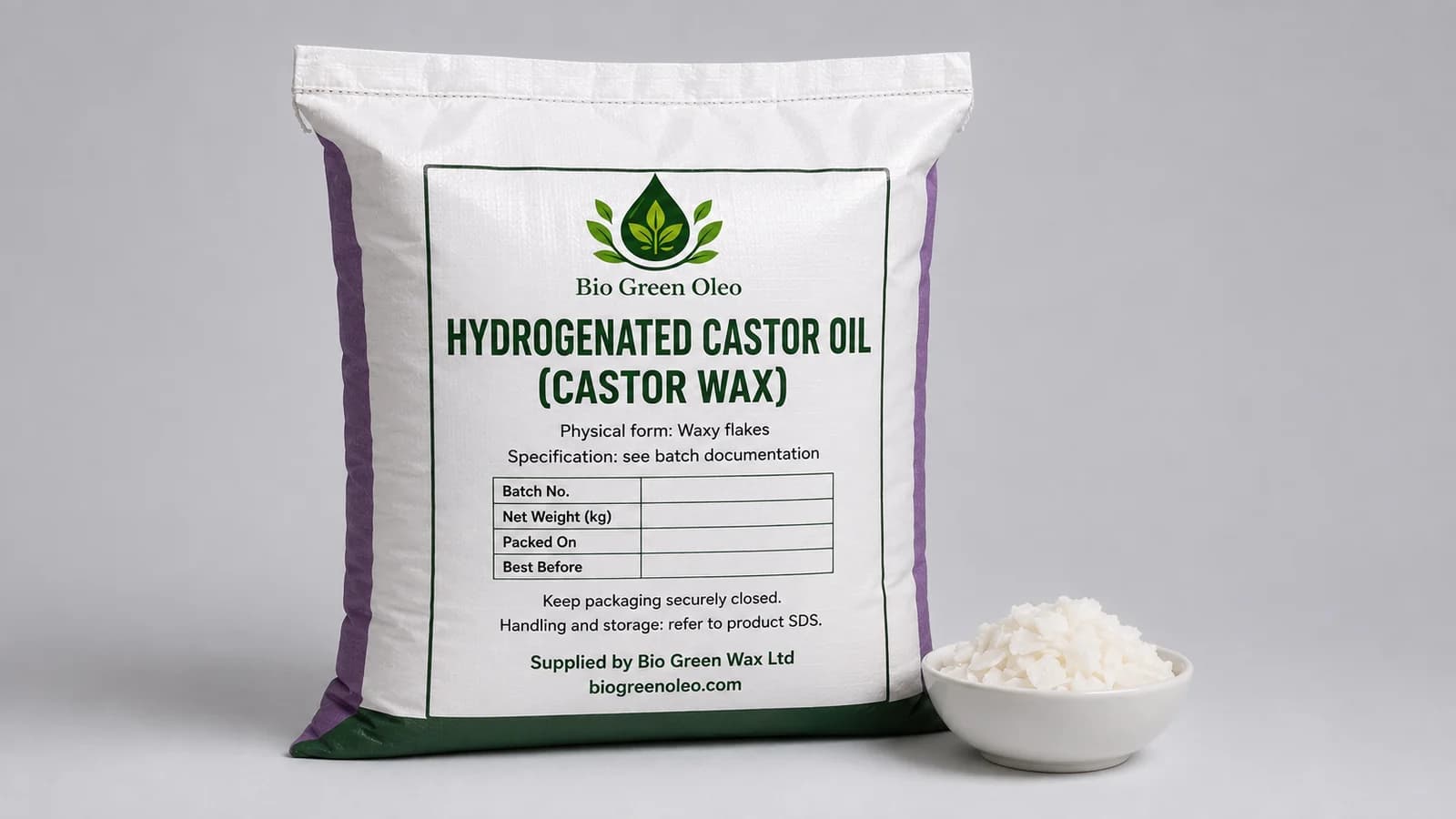
Gehärtetes Rizinusöl (Rizinuswachs)
Gehärtetes Rizinusöl, geliefert als Flakes oder mikronisiertes Pulver, ist die direkte Vorstufe der 12-Hydroxystearinsäure, des Verdickers der meisten Lithiumfette. Durch Spaltung des Wachses wird die Hydroxysäure freigesetzt, die dem Fett seine Struktur verleiht.
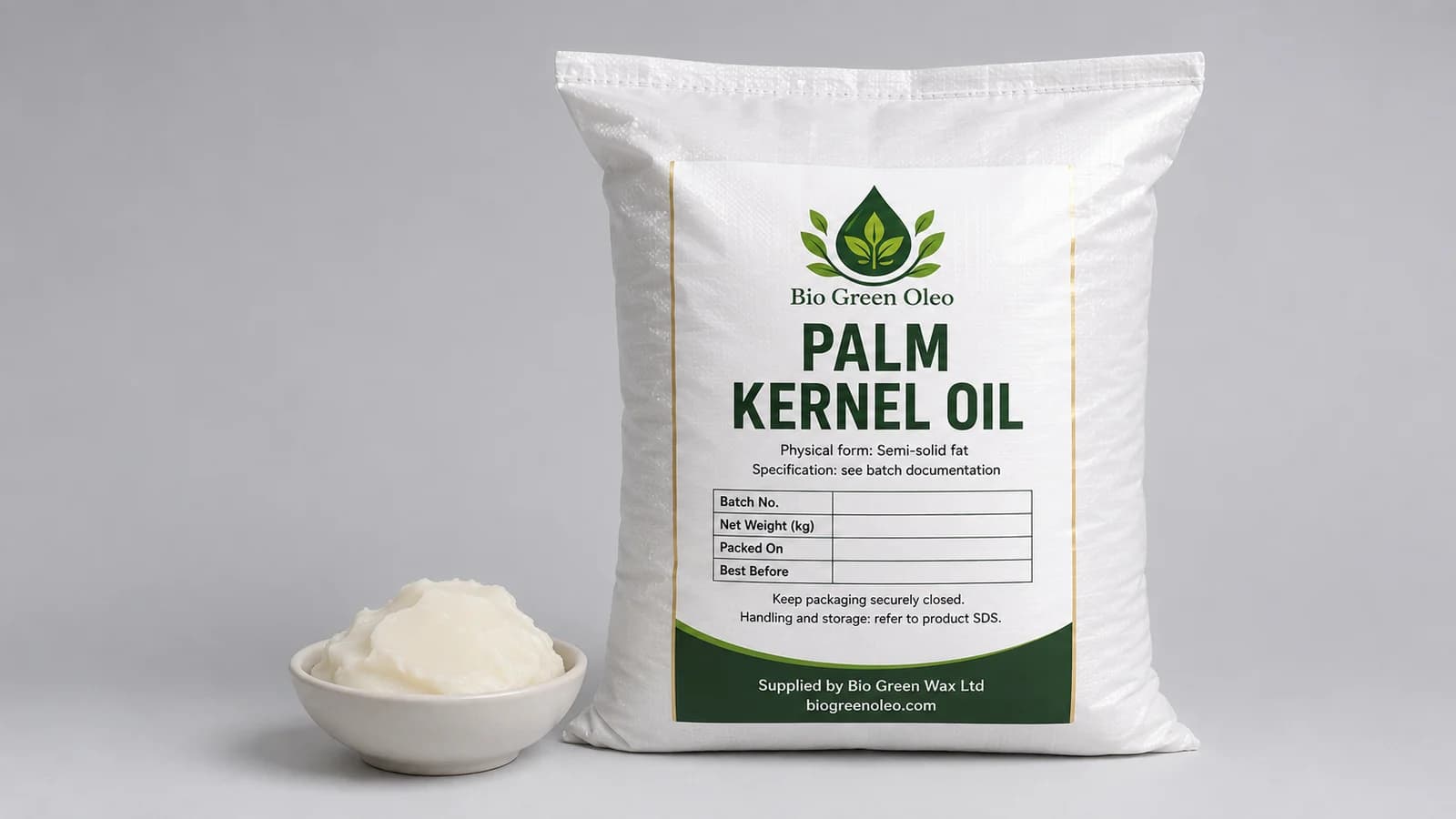
Palmkernöl
Für die oleochemische Weiterverarbeitung wird Palmkernöl wegen der Kettenlänge gekauft, nicht wegen des Schmelzverhaltens. Rund die Hälfte seiner Fettsäuren entfällt auf die Laurinsäurekette mit zwölf Kohlenstoffatomen, auf der die Chemie der Tenside, Fettalkohole und Seifen beruht.
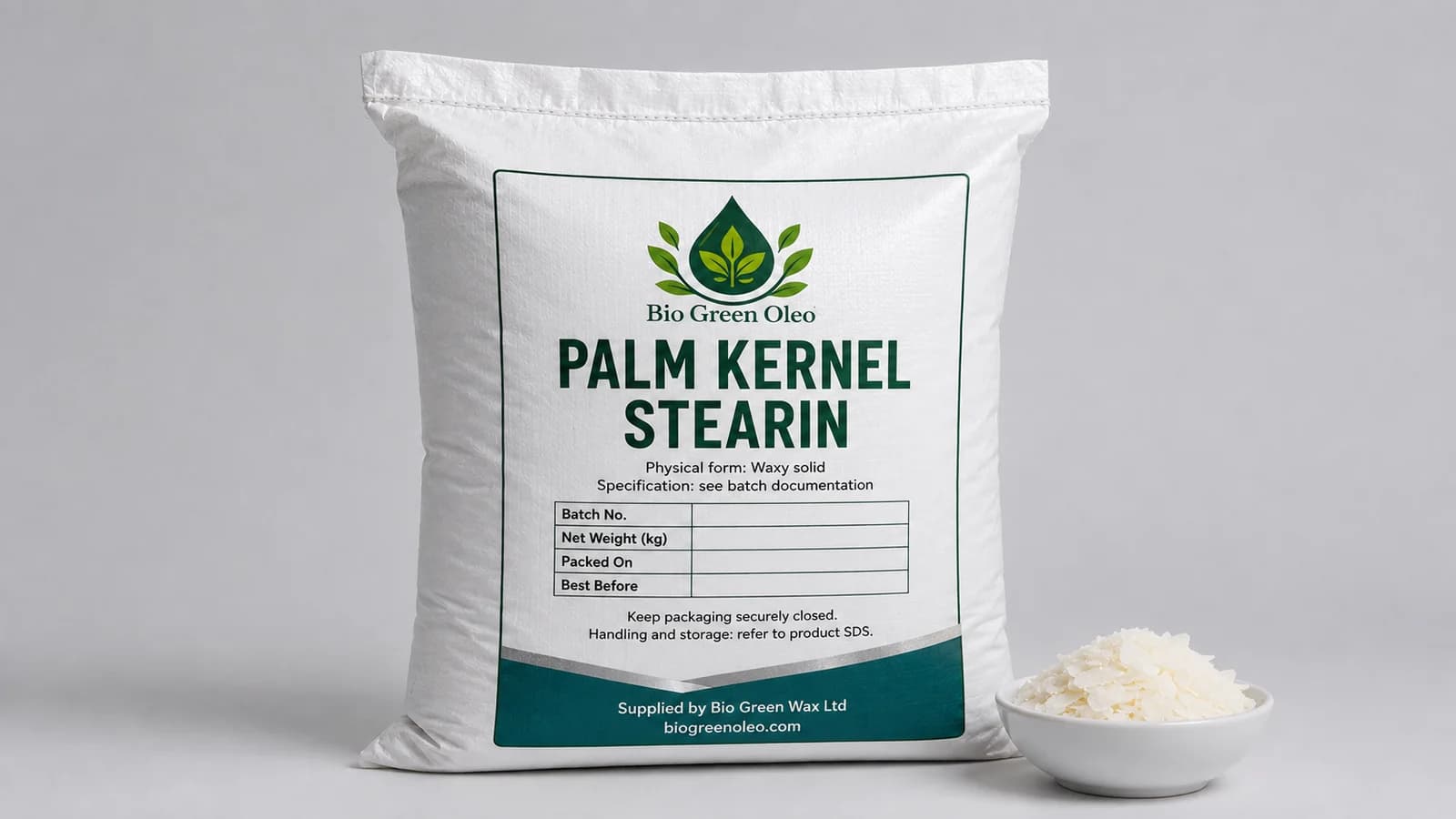
Palmkernstearin
Die Fraktionierung von Palmkernöl konzentriert die gesättigten Ketten in der Stearinfraktion und senkt die Iodzahl in den einstelligen Bereich. Für den Verarbeiter bedeutet das einen Einsatzstoff, der oxidationsbeständig ist und beim Härten wenig Wasserstoff verbraucht.
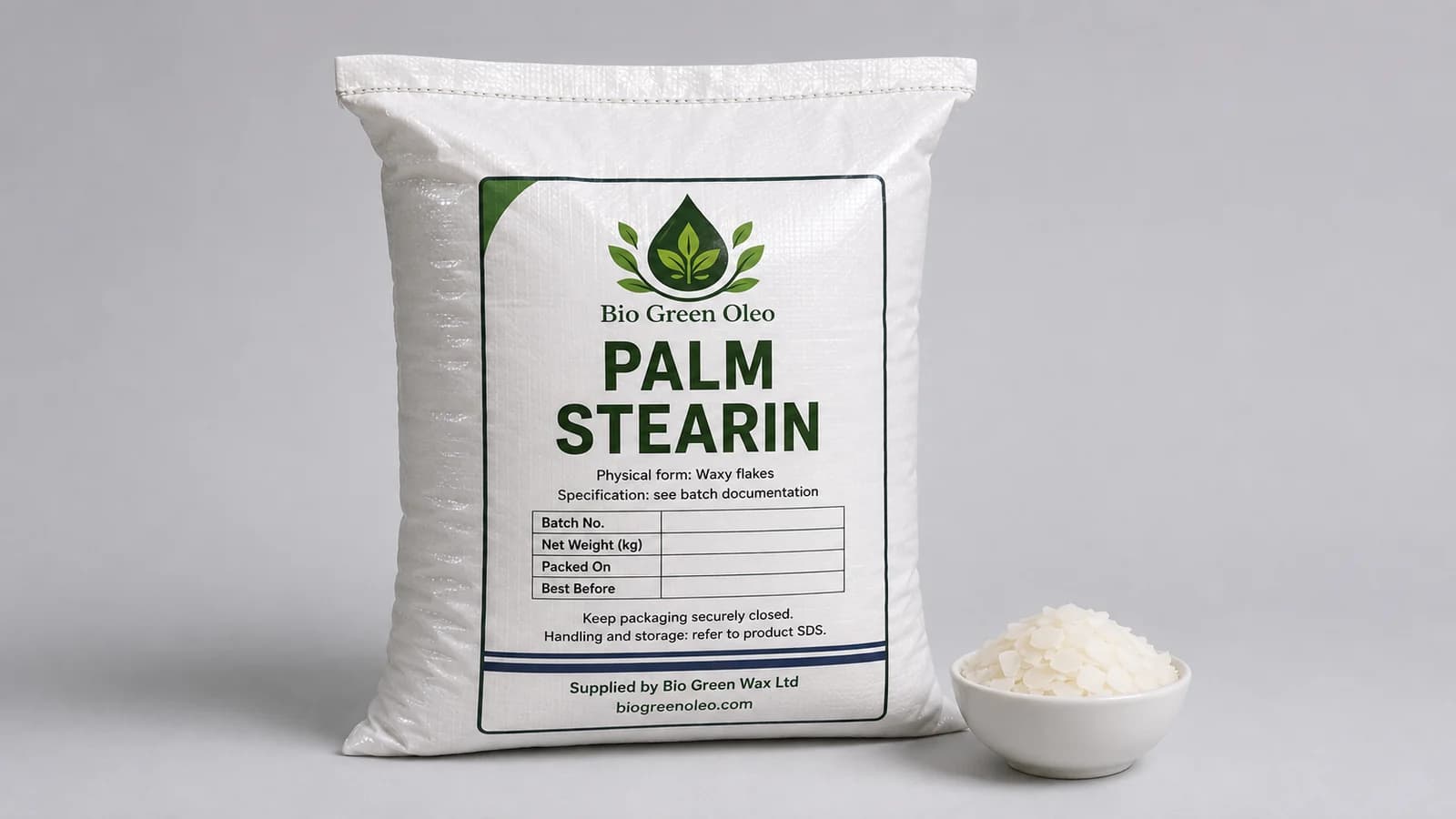
Palmstearin
Palmstearin ist der Anteil, der bei der Fraktionierung von Palmöl fest bleibt. Verarbeiter kaufen es als günstigste konzentrierte Quelle gesättigter Ketten mit sechzehn Kohlenstoffatomen für die Fettspaltung, die Verseifung und die Stearinsäureherstellung.
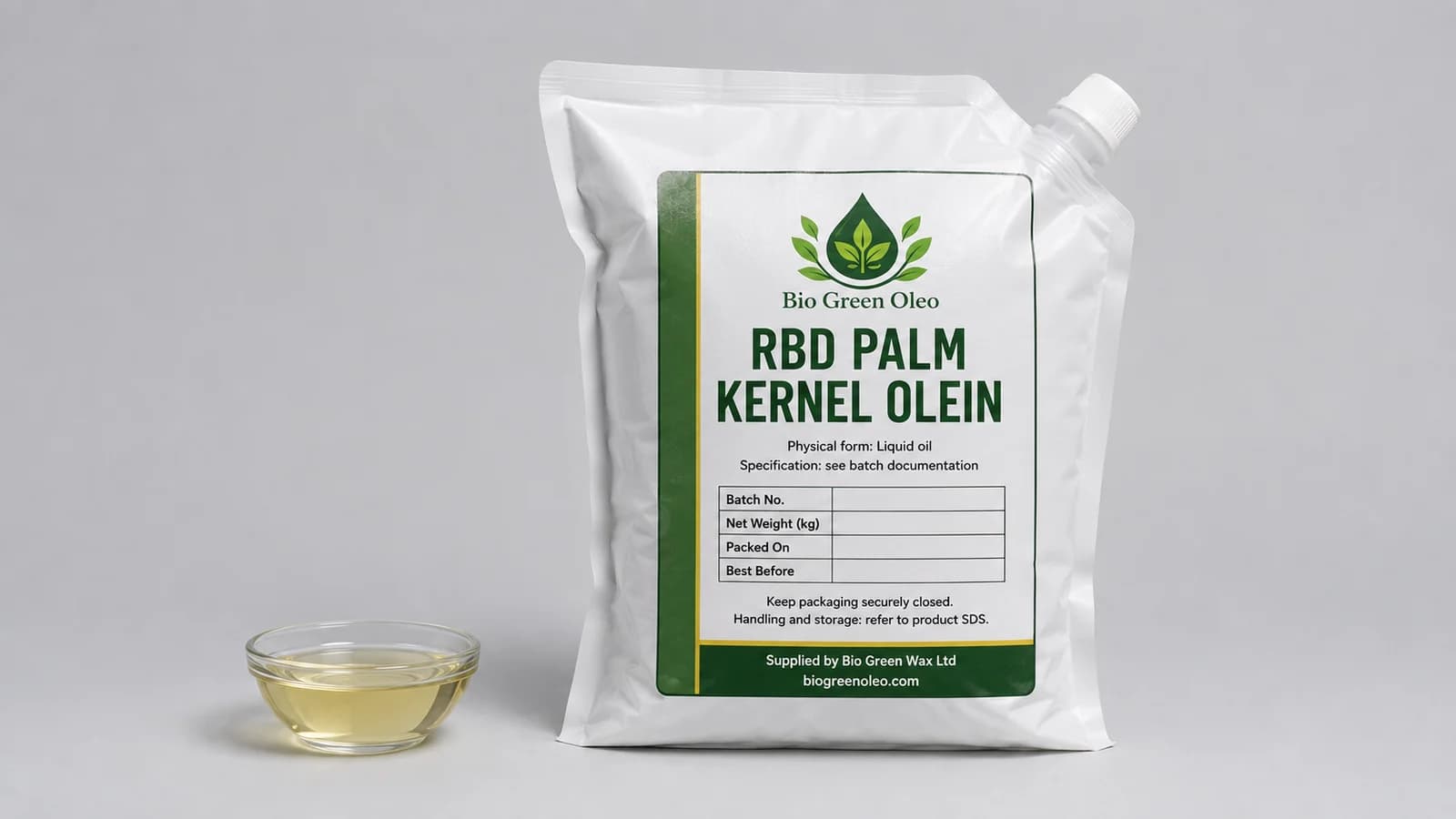
RBD-Palmkernolein
Palmkernolein ist die durch kontrollierte Kristallisation abgetrennte Flüssigfraktion von Palmkernöl. Für die oleochemische Weiterverarbeitung reichert es die kürzeren C8- bis C12-Ketten an und bleibt bei Umgebungstemperatur pumpfähig, was den Heizbedarf der Tanks senkt.
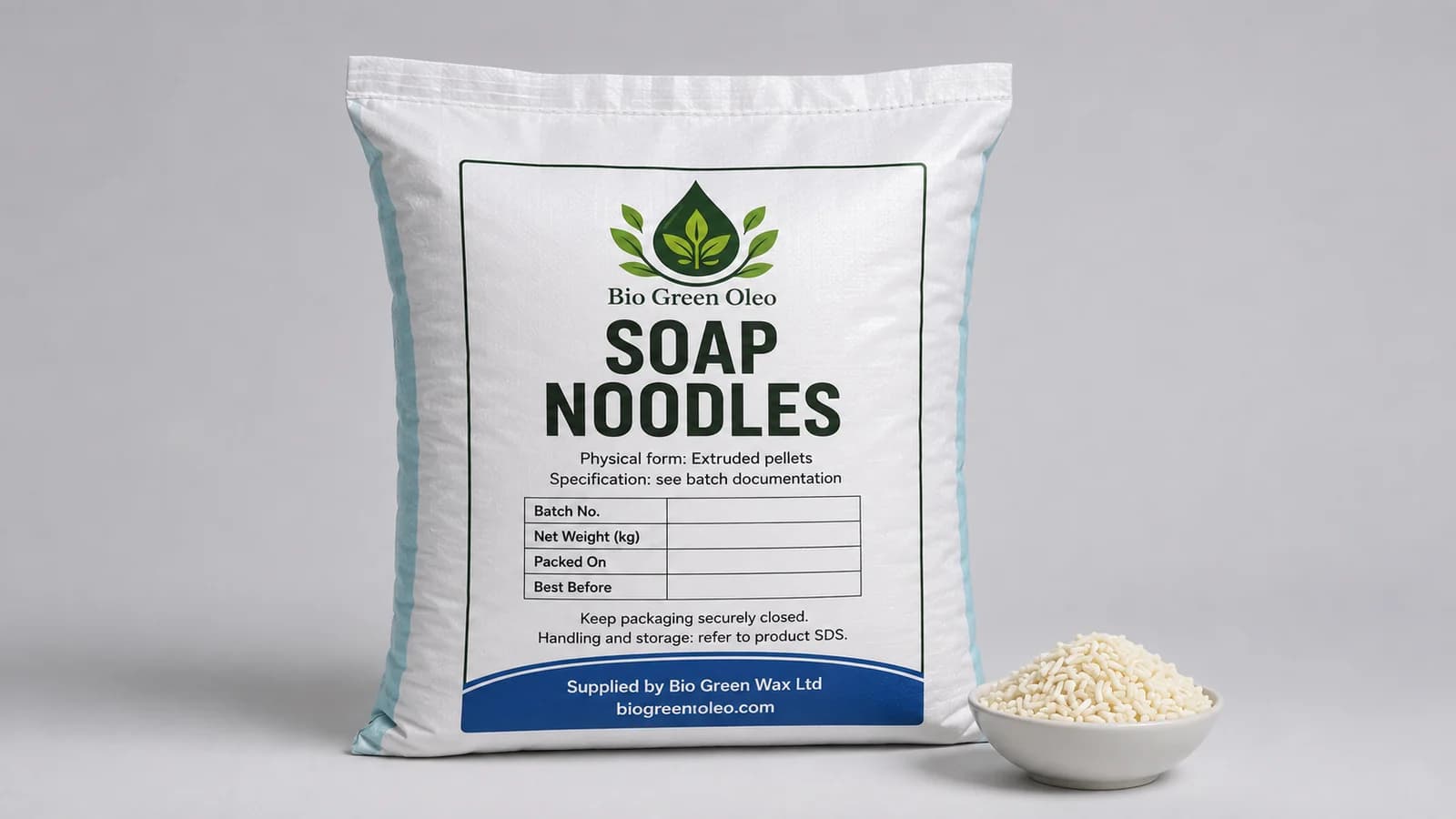
Seifennudeln
Seifennudeln sind die halbfertigen, extrudierten Pellets, die Stückseifenhersteller kaufen, statt selbst zu verseifen. Sie werden nach dem Gesamtfettgehalt und nach dem Verhältnis von Palmöl zu Palmkernöl eingestuft, üblich sind 80:20 oder 90:10.
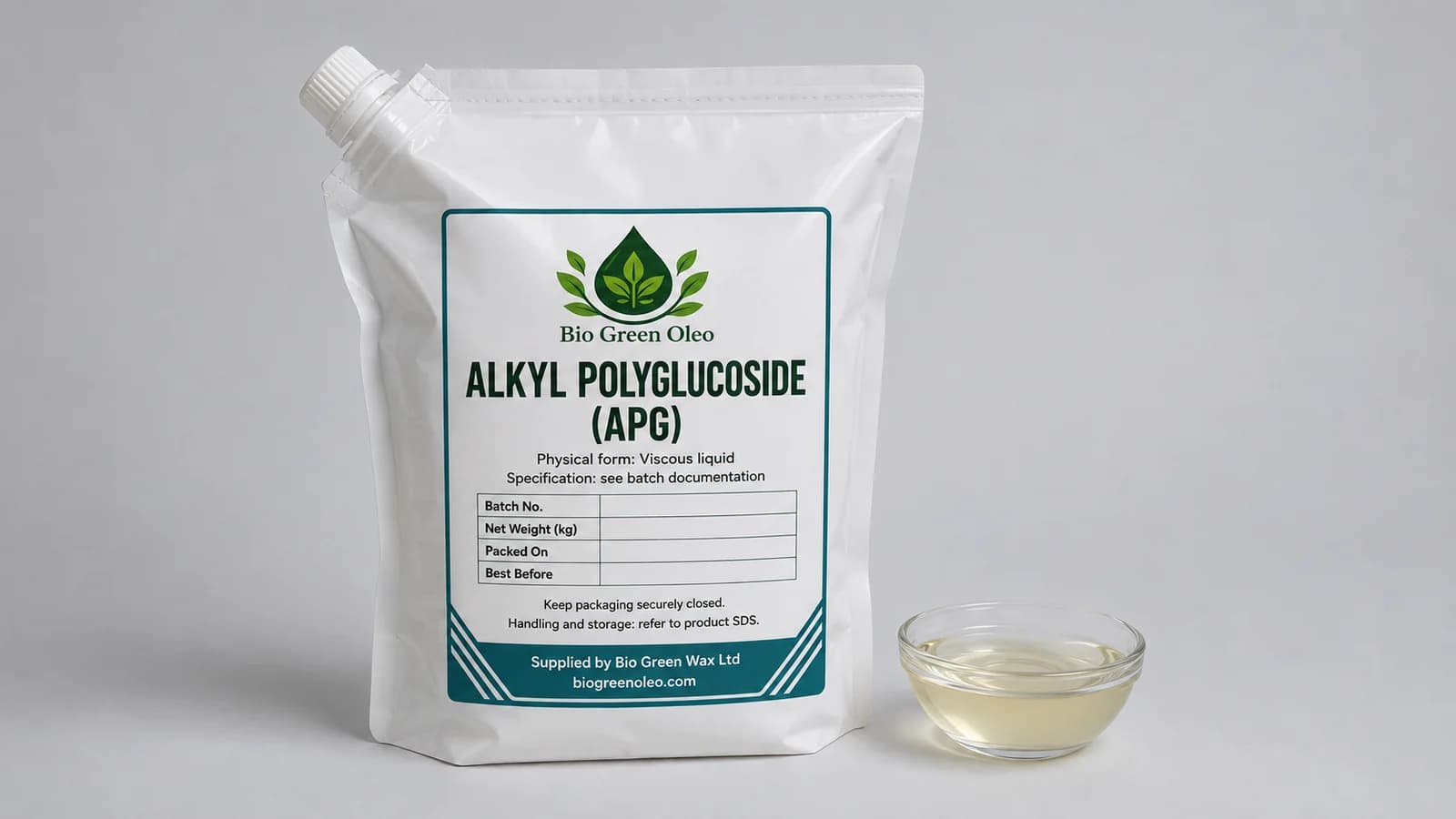
Alkylpolyglucosid (APG)
Alkylpolyglucosid (CAS 68515-73-1, INCI Coco-Glucoside) ist ein nichtionisches Tensid, das durch Verknüpfung von Glucose aus Stärke mit einem Fettalkohol aus Kokos- oder Palmkernöl hergestellt wird. Es ist vollständig pflanzlichen Ursprungs, leicht biologisch abbaubar und ungewöhnlich mild.
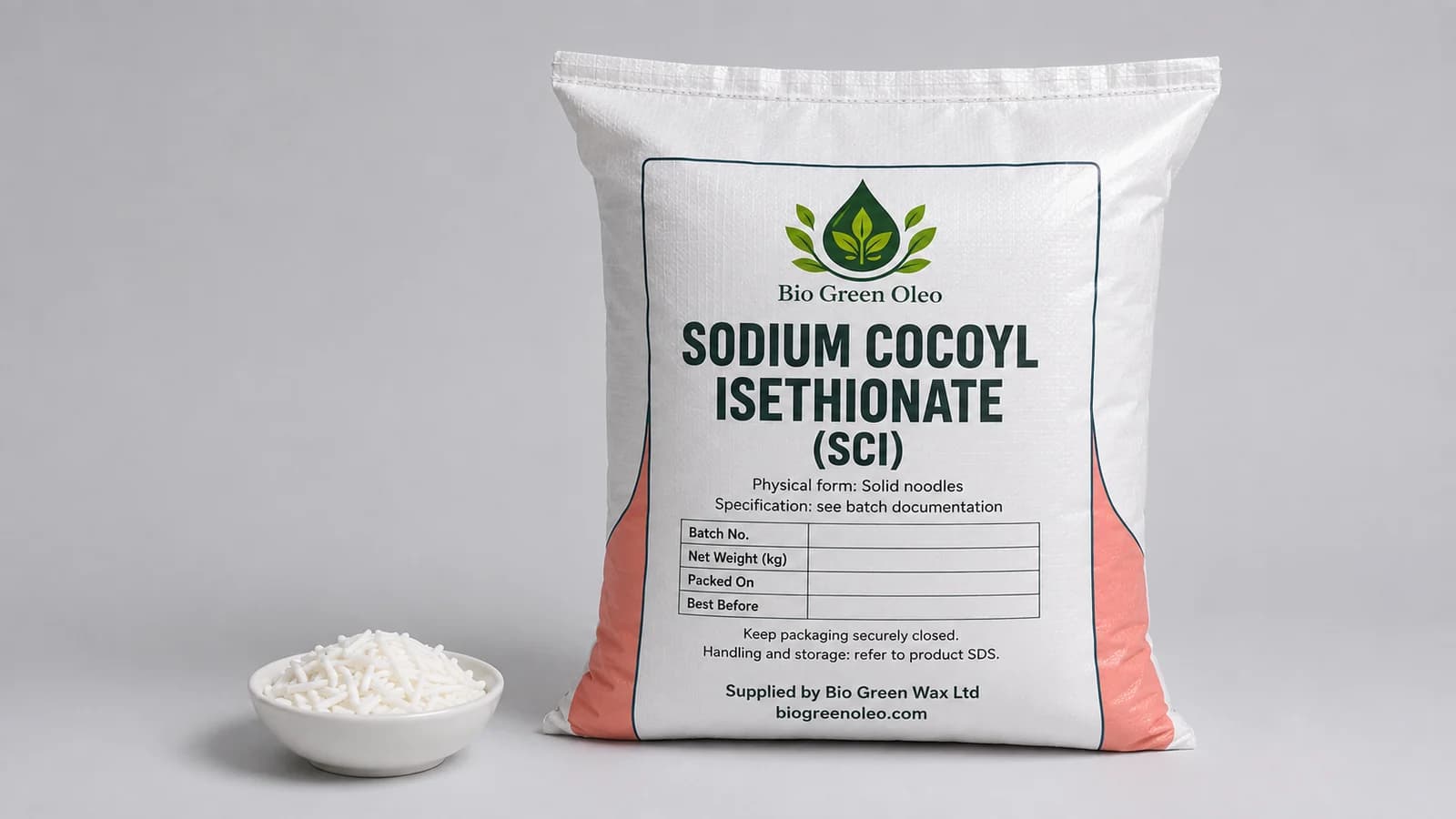
Natriumcocoylisethionat (SCI)
Natriumcocoylisethionat (CAS 61789-32-0, INCI Sodium Cocoyl Isethionate) ist ein mildes anionisches Tensid aus Kokosfettsäuren. Es schäumt bei neutralem pH-Wert reichlich, und genau das macht Syndetstücke ohne die Härte echter Seife möglich.
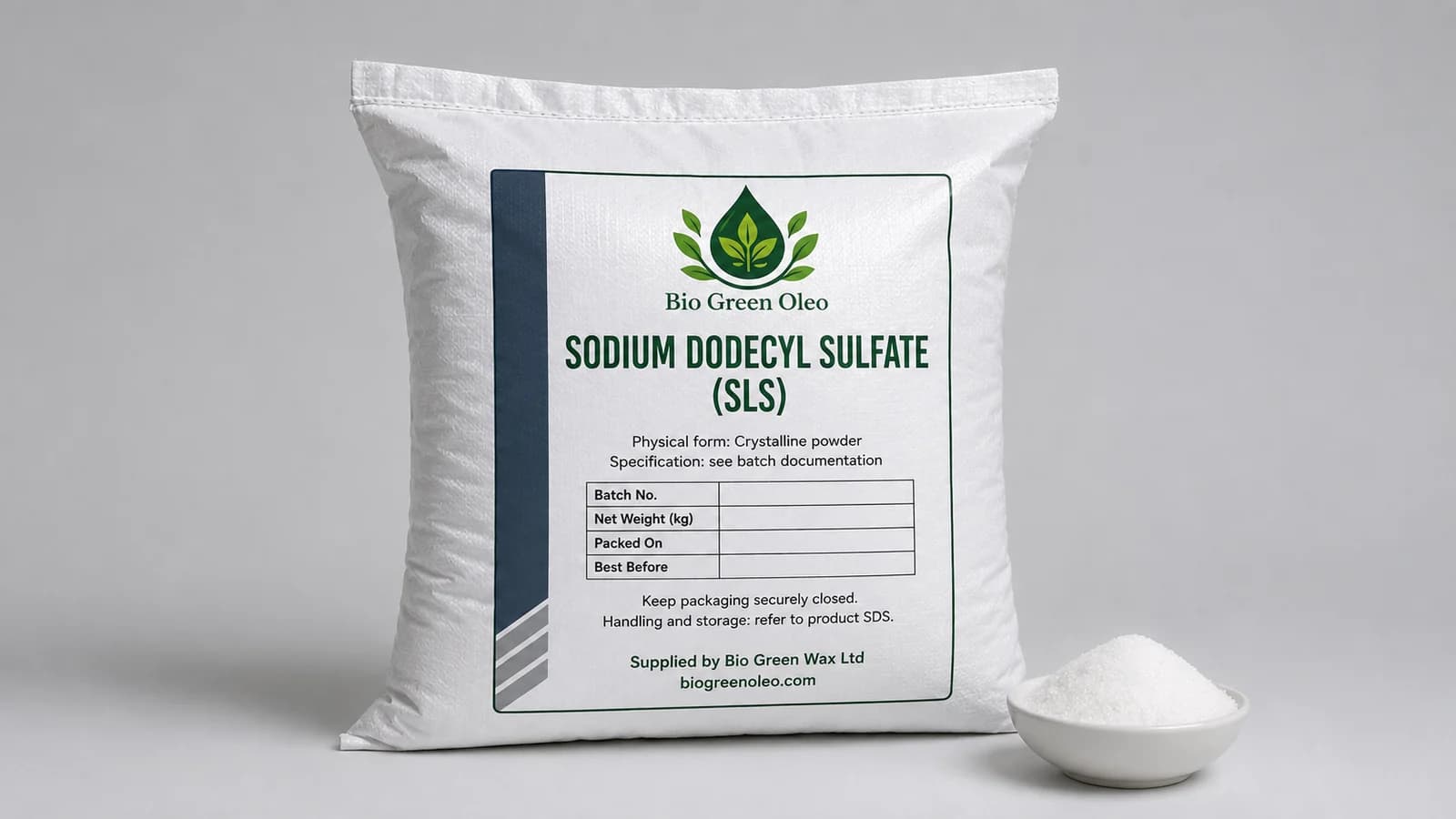
Natriumdodecylsulfat (SLS)
Natriumdodecylsulfat (CAS 151-21-3, INCI Sodium Lauryl Sulfate) ist das Standard-Aniontensid, hergestellt durch Sulfatierung von Laurylalkohol aus Kokos- oder Palmkernöl. Es schäumt stark und reinigt aggressiv bei niedrigen Kosten.
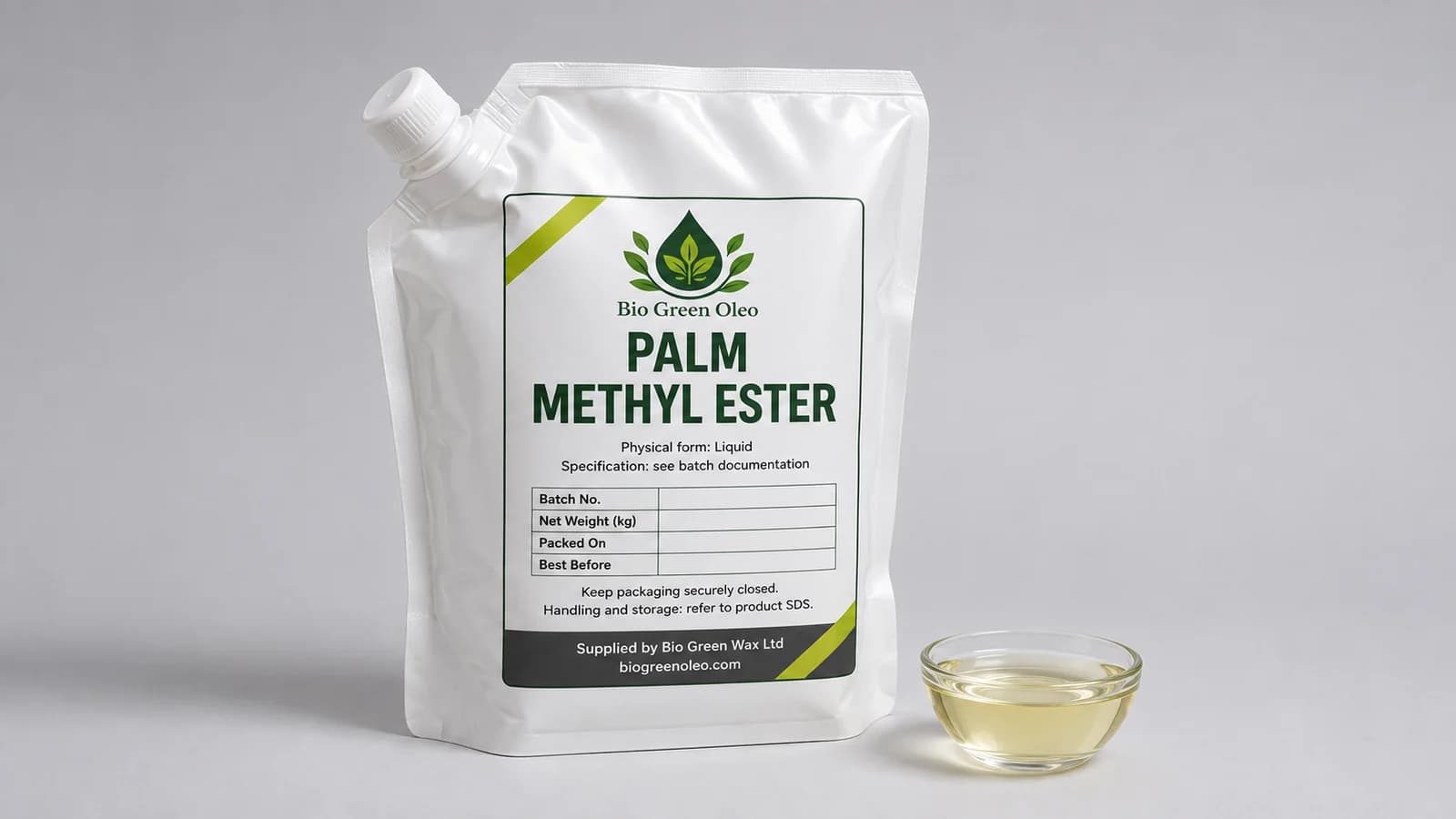
Palmmethylester
Palmmethylester wird durch Umesterung von Palmöl oder Palmfettsäuren mit Methanol hergestellt. Er wird für industrielle Anwendungen als biobasiertes Lösemittel, Schmierstoffbasis und Sulfonierungsrohstoff geliefert, nicht als Kraftstoff für den Endverbraucher.
Start with the process and specification
- End use and required material or feedstock
- Critical analytical limits and physical form
- Handling temperature, storage and pack format
- Volume, documentation needs and delivery destination
Confirm the evidence before ordering
Grade, origin and certification are confirmed for each proposed source. A vegetable-derived feedstock is not automatically certified sustainable, pharmaceutical grade or suitable for every application; request the evidence needed for your intended use.
Product illustrations show representative material and packaging. The quotation confirms the actual source, grade, pack size and labelling.
Review documentation