Fatty Acids
Palm Stearic Acid, PFAD, PKFAD, Rapeseed, Soybean and Sunflower Acid Oils.


Iodine value, titre, acid value and colour agreed before loading and held across consignments.
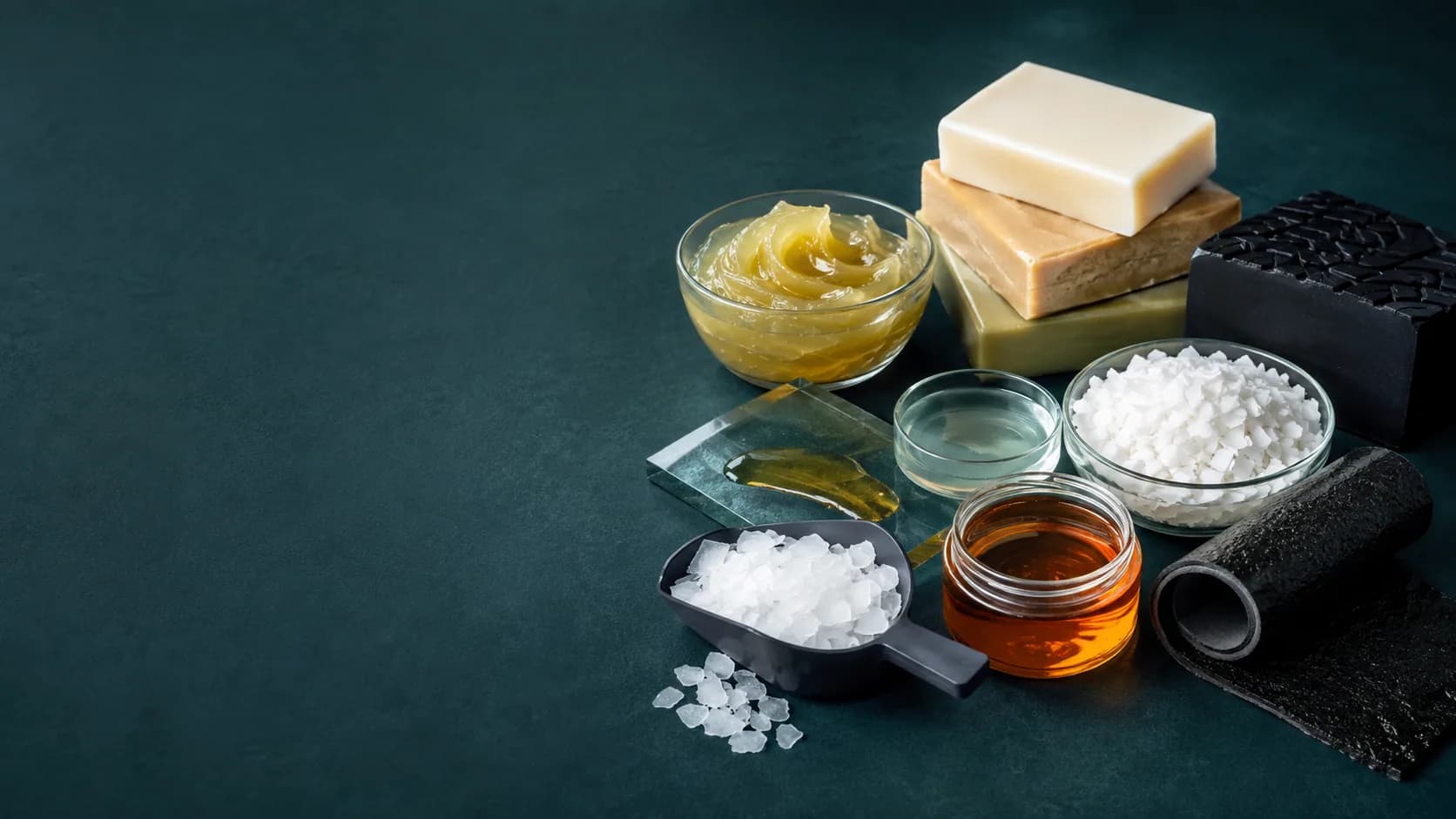
Palm kernel fractions, palm stearin and castor derivatives sized to your process, not to a generic grade.
Four product families for oleochemical processors - each leading directly to grades, specifications, documents, samples, and quotation support.
Palm Stearic Acid, PFAD, PKFAD, Rapeseed, Soybean and Sunflower Acid Oils.
Crude and refined glycerine with strength, purity and intended-use requirements confirmed on enquiry.
Tallow-free soap noodles, laundry and toilet soap base, transparent and translucent grades.
Palm Kernel Oil, Palm Kernel Stearin and Olein, Palm Stearin, Castor Oil, Hydrogenated Castor Oil.
Share the reaction, formulation or processing step and the critical analytical limits. Our team compares the available material and source documents with that brief.
We compare titre, iodine value, acid value, saponification value, moisture and colour against the reaction or compounding step the material must serve.
Specifications, certificates of analysis, safety data, origin declarations and available sustainability evidence are reviewed for the nominated source.
Palm, palm-kernel, castor and CNSL-derived materials are sourced by defined origin and processing route, with source changes discussed before shipment.
Samples, retained references and trial lots help confirm reaction behaviour, colour and finished-product performance before commercial loading.
A clear 5-step B2B support journey - from product enquiry to grade recommendation, documents, sample evaluation and shipment coordination.
Product, application, quantity and destination.
Grade matching by technical parameters.
COA, SDS/MSDS, TDS and specifications.
Lab evaluation and trial-lot coordination.
Packing, shipment and export support.
Support for technical, procurement, R&D and compliance teams. Availability depends on product, grade, origin and supplier certification status.
Request DocumentsCOA
Batch quality
SDS / MSDS
Safety data
TDS
Technical data
Specification Sheet
Grade details
Origin / Supplier Declaration
Traceability
RSPO / REACH / Halal / Kosher where applicable
Where applicable
Oleochemical grades selected for saponification, esterification, compounding, surfactant manufacture and renewable resin systems.
Soap noodles, stearic acid and fatty acid distillates for laundry bars, toilet soap and powder detergent lines, supplied to agreed titre, colour and moisture. Specify the soap or detergent format, intended process and required finished-product characteristics. Soap noodles, fatty acids and surfactant inputs are not interchangeable feedstocks. Confirm composition, moisture, colour and any other agreed limits against the production recipe before a trial.
Refined glycerine, mild surfactant actives and vegetable-derived fatty acids for skincare, haircare and syndet formulations. Start with the formulation type, cleansing or humectancy requirement and target sensory properties. Ask for the selected material's composition, impurity limits and safety information. Cosmetic, pharmaceutical or other grade claims require the applicable source evidence and the buyer's approval.
Stearic acid as an activator and internal lubricant, and castor derivatives for polyamides and polyurethanes. Describe the polymer system, compounding conditions and purpose of the additive or feedstock. Review the nominated stearic acid or castor derivative against required physical form and analytical limits. Evaluate processing behaviour and finished-part performance before accepting a new source.
Hydrogenated castor oil, fatty acids and palm kernel fractions for lithium and calcium grease thickeners and metalworking fluids. Share the lubricant or grease chemistry, reaction conditions and target consistency. Fatty-acid and castor-derived inputs should be assessed against the complete process, including moisture and handling requirements. Confirm the specification and sample evaluation plan before bulk procurement.
Palm and palm kernel stearin and stearic acid for pillar, container and tealight production. Match the stearin or fatty-acid input to the candle format, blend and processing conditions. Raw-material selection alone does not establish burn performance. Evaluate the complete candle system, including wick, container and fragrance where used, before agreeing commercial supply.
Cashew nut shell liquid, cardanol and fatty acid distillates as renewable phenolic and alkyd building blocks. Describe the resin or coating chemistry, processing route and required material characteristics. CNSL, cardanol and fatty-acid inputs differ in composition and processing history. Review the proposed grade's analysis and safety data and validate it in the actual formulation.
Feedstocks selected by process and specification
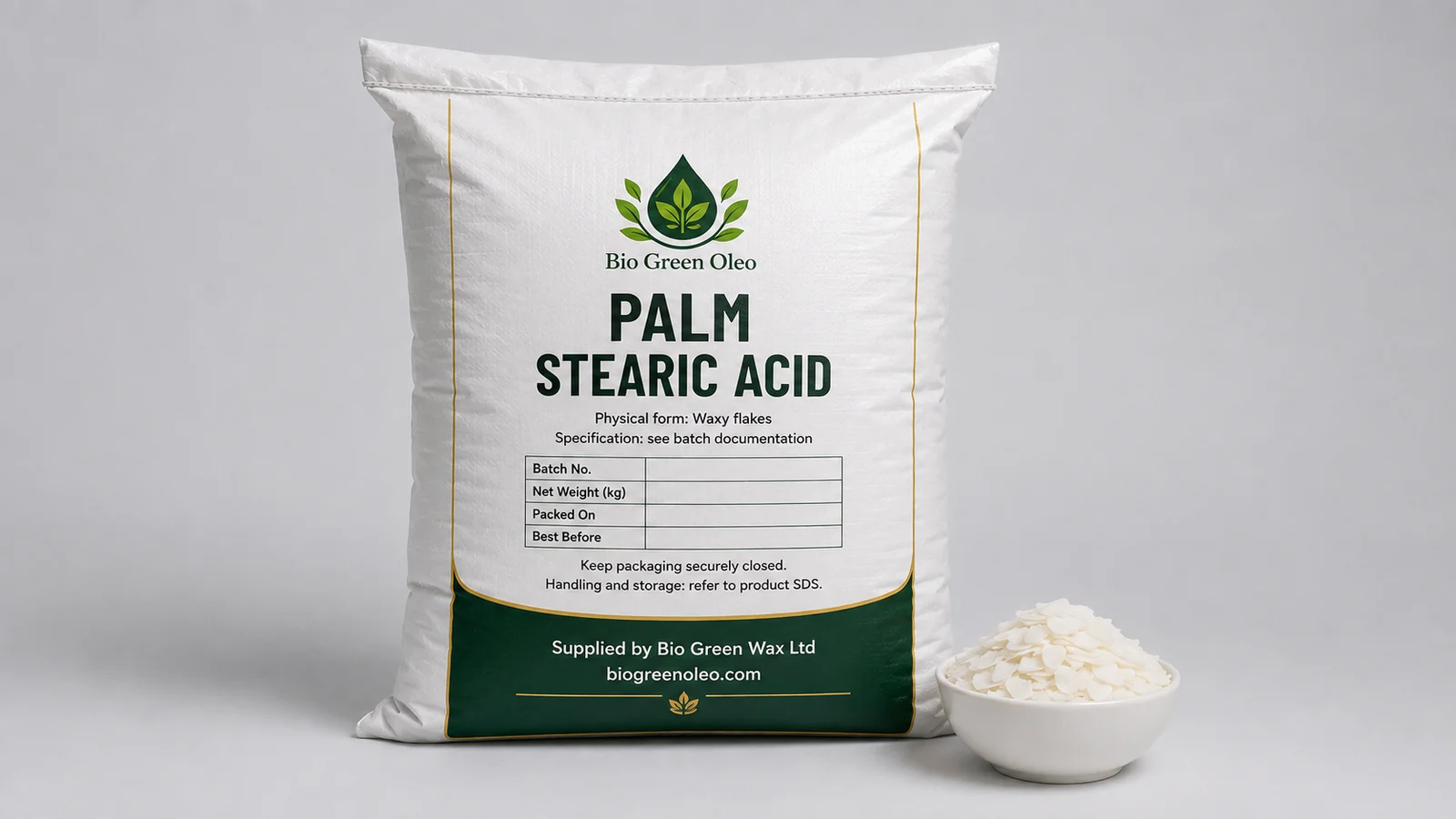
Palm stearic acid is not pure stearic acid but a graded blend of palmitic and stearic chains, sold by titre. Common grades are 40:60, 50:50 and triple-pressed, and the titre determines hardness, melting point and downstream behaviour.
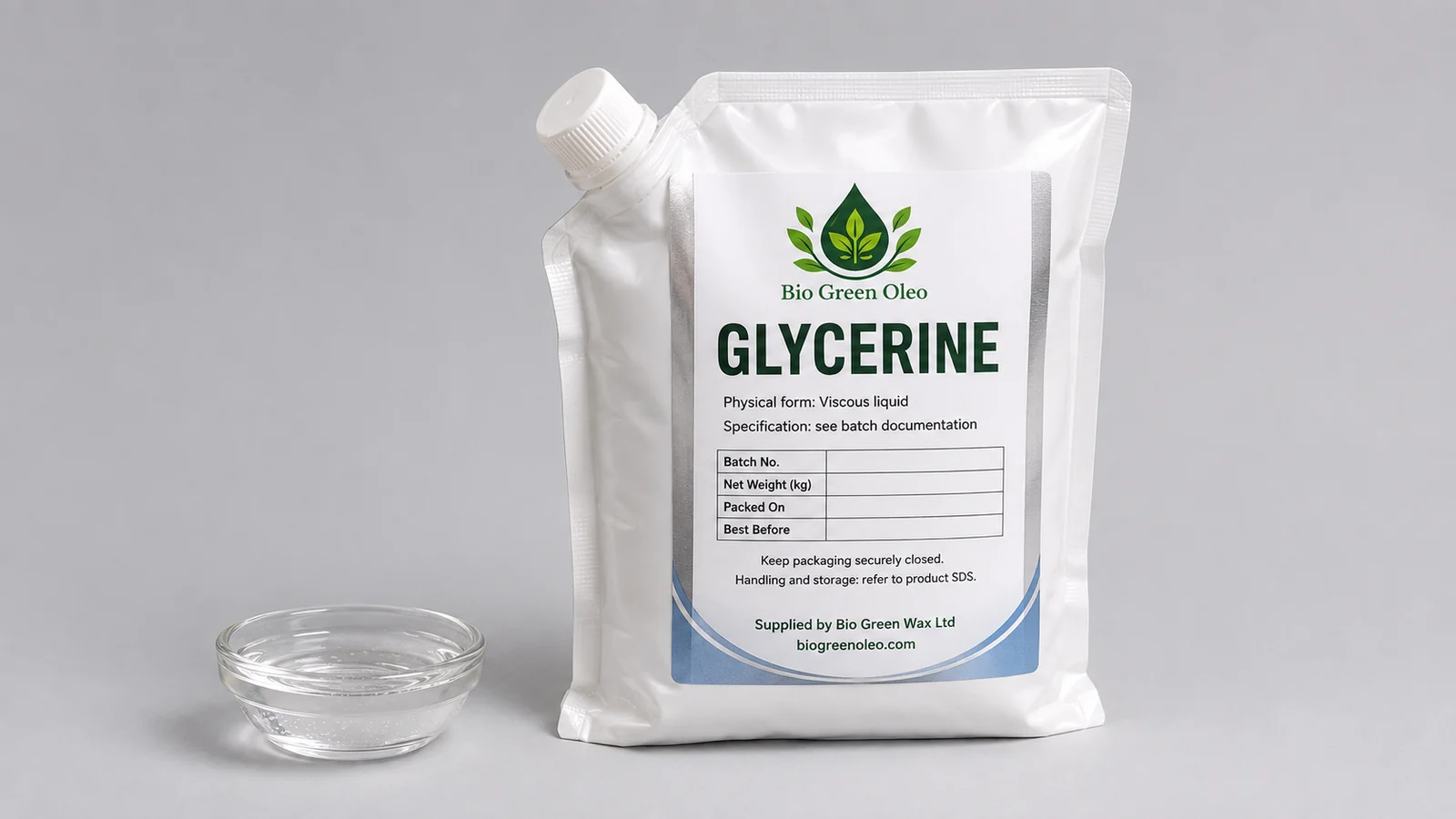
Glycerine (CAS 56-81-5, INCI Glycerin) is propane-1,2,3-triol, a clear, odourless, syrupy liquid with a sweet taste. It is recovered as the co-product of soap making and biodiesel manufacture, and is traded as crude or refined to 99.5 percent.
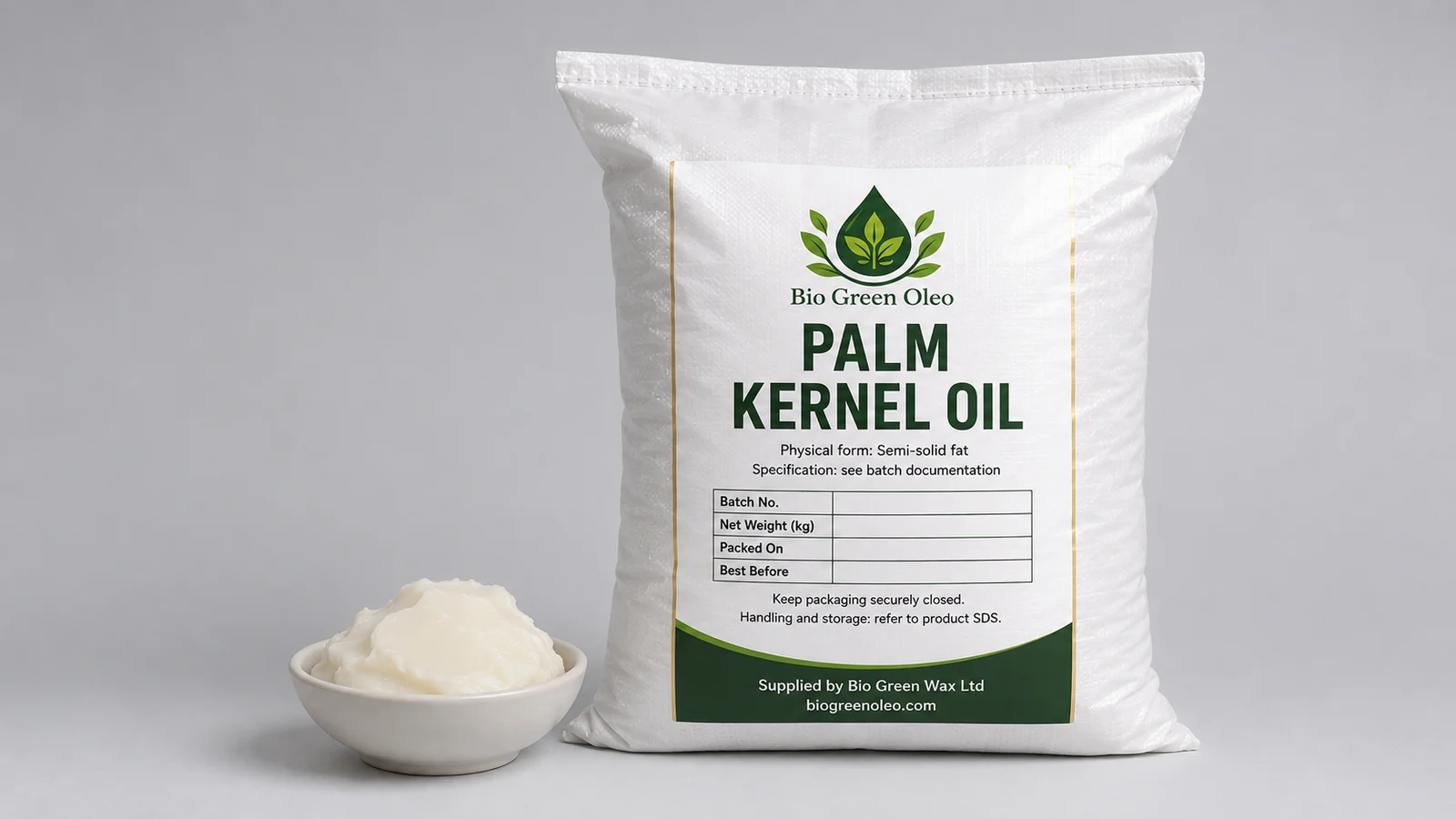
For oleochemical conversion, palm kernel oil is bought for chain length rather than for melting behaviour. Roughly half its fatty acids are the twelve-carbon lauric chain on which surfactant, fatty alcohol and soap chemistry all depend.
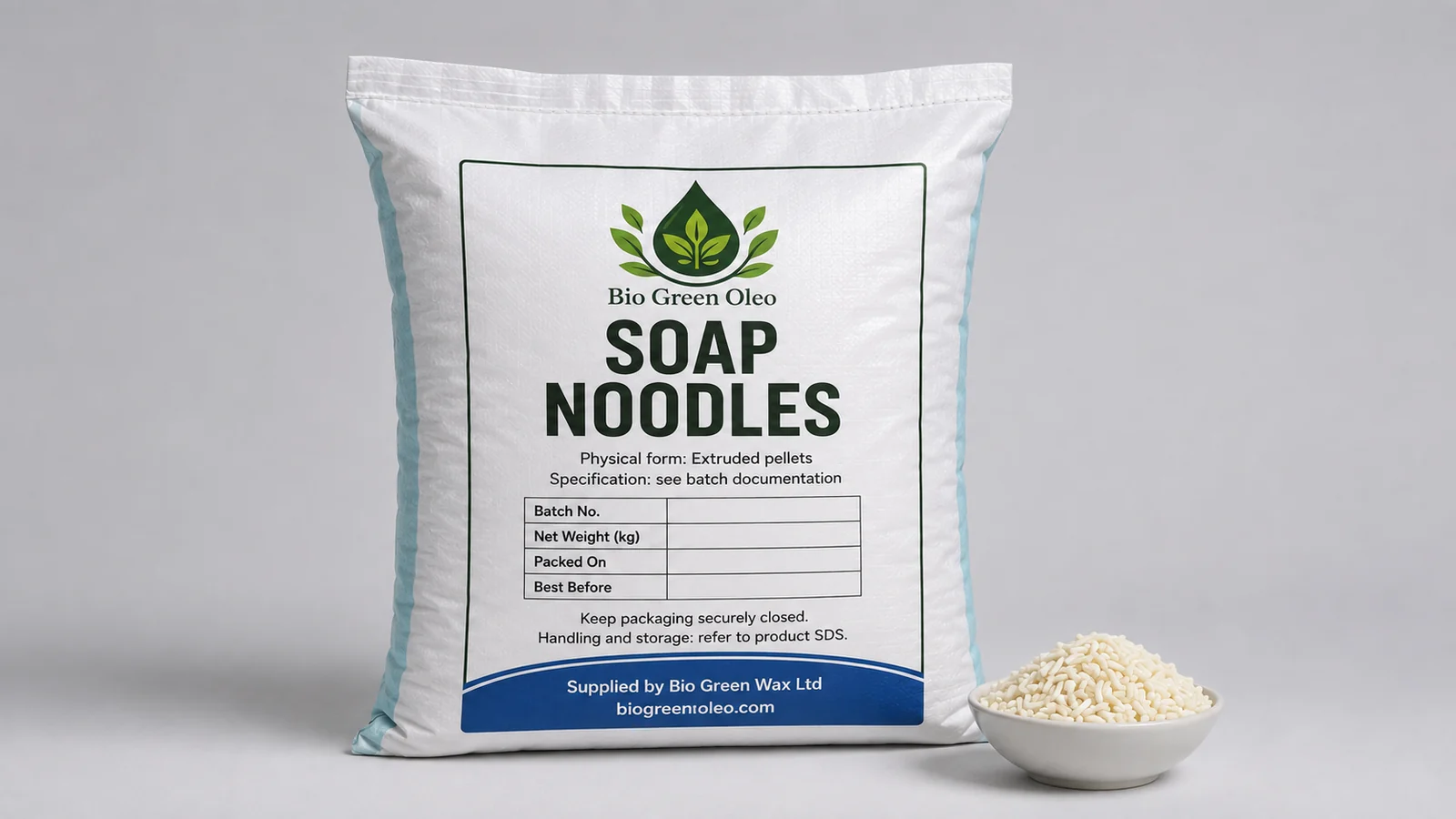
Soap noodles are the semi-finished extruded pellets that bar soap manufacturers buy in place of running their own saponification. They are graded by total fatty matter and by the palm to palm kernel ratio, commonly 80:20 or 90:10.
Specification control, source visibility and shipment planning for bulk oleochemical feedstocks and derivatives.
Stay updated with company news and industry developments

Turn an oleochemical enquiry into a clear sourcing brief with material identity, process requirements, analytical limits and source documents.

A buyer checklist for aligning oleochemical physical form, packaging, storage, unloading and transport documents before arranging delivery.
Share the process, target specification, physical form, annual volume and delivery point so our team can nominate a suitable grade.